English
- English
- Español
- Português
- русский
- Français
- 日本語
- Deutsch
- tiếng Việt
- Italiano
- Nederlands
- ภาษาไทย
- Polski
- 한국어
- Svenska
- magyar
- Malay
- বাংলা ভাষার
- Dansk
- Suomi
- हिन्दी
- Pilipino
- Türkçe
- Gaeilge
- العربية
- Indonesia
- Norsk
- تمل
- český
- ελληνικά
- український
- Javanese
- فارسی
- தமிழ்
- తెలుగు
- नेपाली
- Burmese
- български
- ລາວ
- Latine
- Қазақша
- Euskal
- Azərbaycan
- Slovenský jazyk
- Македонски
- Lietuvos
- Eesti Keel
- Română
- Slovenski
- मराठी
- Srpski језик
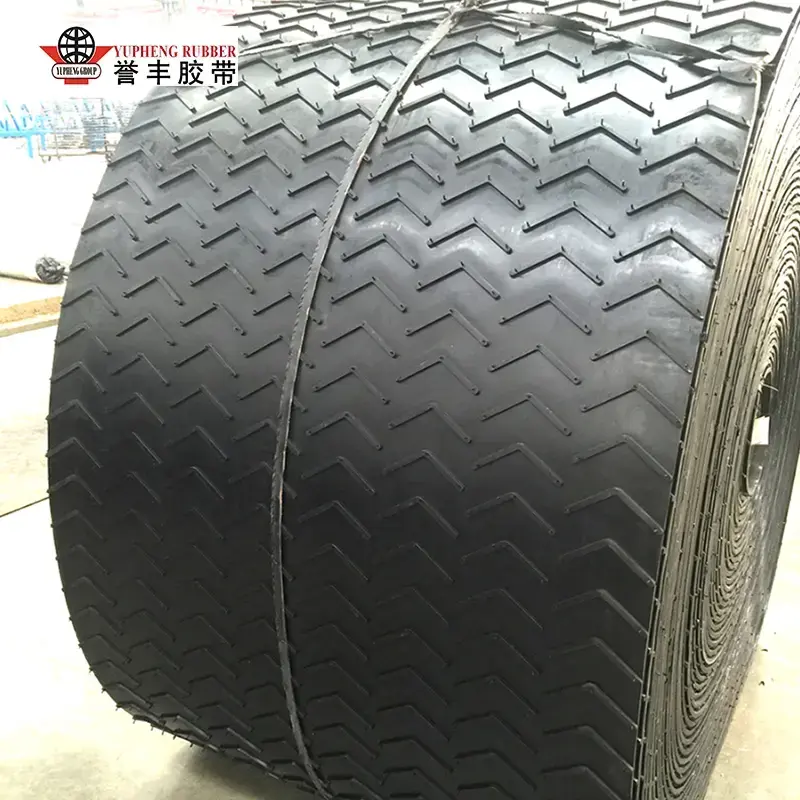
Studded Conveyor Belt
Designed for precise and gentle material handling, YUFENG Studded Conveyor Belt uses raised round, oval or capsule-shaped studs to provide controlled point-contact grip. Field-tested in woodworking, food processing and logistics, it improves product stability on inclined conveyors while reducing surface damage. PVC, PU, rubber and PE options are available with customized stud shapes, heights and densities.
Gentle gripping and stable product positioning are the key advantages of YUFENG Studded Conveyor Belt. Its individually raised round, oval or capsule-shaped studs create controlled point contact, providing strong friction without excessive surface pressure. The spaced stud layout also allows debris and moisture to pass through, making the belt suitable for woodworking, food processing and logistics applications where product integrity and surface finish are critical.
Design Structure & Surface Pattern
1. Studded Surface for Controlled Material Grip
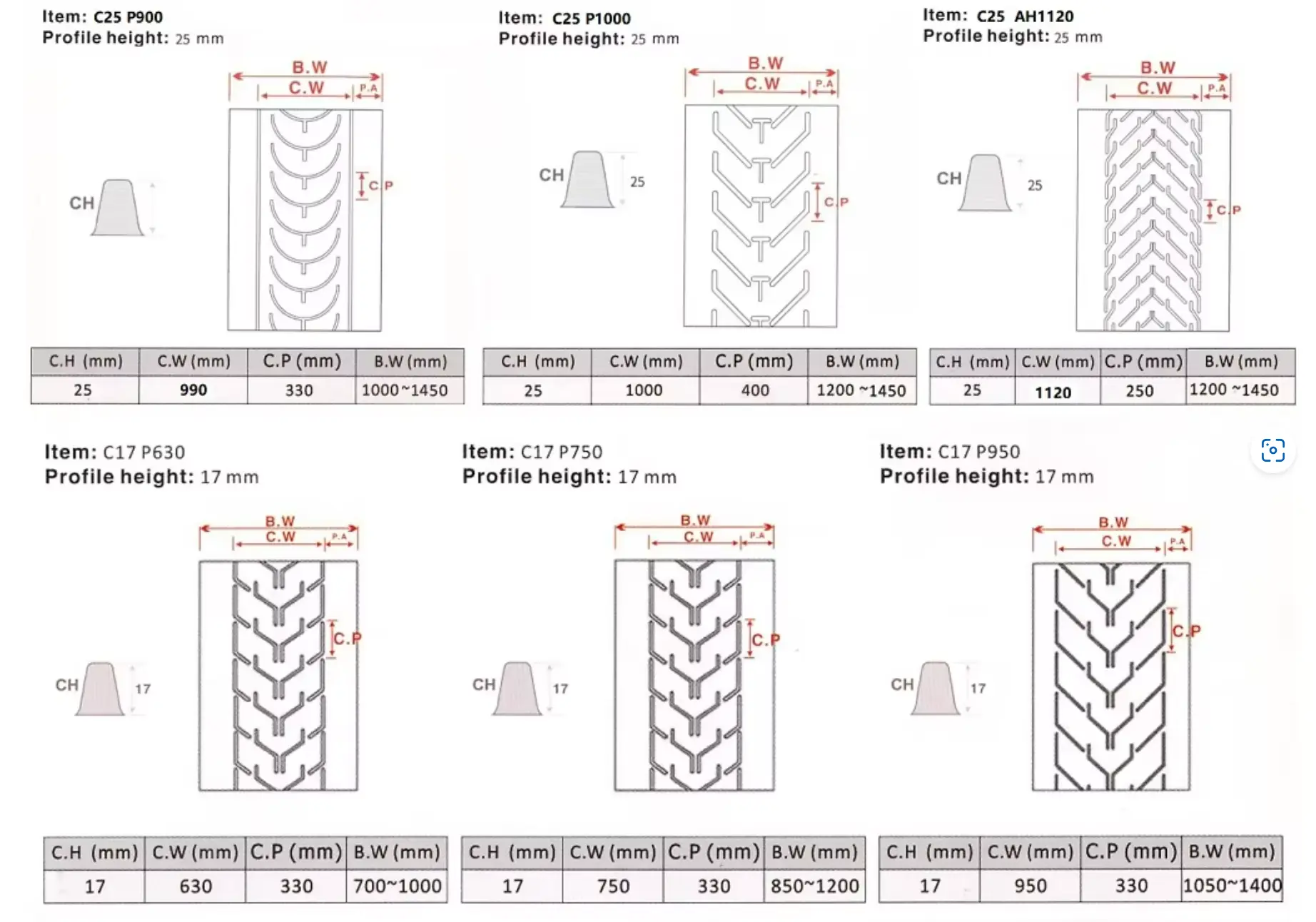
YUFENG Studded Conveyor Belt uses regularly distributed raised studs to create multiple localized contact points between the belt surface and conveyed materials. Compared with continuous chevron or diamond patterns, the studded structure provides controlled grip while reducing excessive surface contact. This makes the belt suitable for products where stable handling and reduced surface marking are important.
2. Open Pattern for Easier Material Release
The spaces between individual studs form small channels across the belt surface. These gaps help water, dust, fines and residual materials move away during belt operation, reducing accumulation on the carrying surface. The structure is particularly suitable for wash-down environments, wet materials, agricultural products and applications where surface cleaning is required.
3. Stud Geometry Matched to Material Characteristics
YUFENG provides different stud geometries according to the required conveying behavior. Round studs with domed surfaces provide balanced grip for general material handling, packaging and logistics. Oval studs create a more directional contact pattern for products requiring stable positioning during transport. Capsule-shaped studs provide a rounded surface profile for woodworking, sanding and other surface-finishing applications.
4. Flexible Pattern Configuration
Stud height, spacing, arrangement and belt dimensions can be selected according to product size, conveying angle, belt speed and material properties. This allows the surface pattern to be matched to fragile products, packaged goods, wet materials and fine particles without relying on a single universal pattern design.
Typical Material Handling Applications
1. Food & Agricultural Products
The studded surface is suitable for handling fruits, vegetables, grain and other products that require controlled movement. The open pattern also facilitates cleaning and helps reduce material accumulation during repeated conveying cycles.
2. Packaging & Logistics
For cartons, packaged goods, bottles and similar finished products, the distributed studs provide stable contact while avoiding the continuous raised ribs found on some conventional patterned belts. The pattern can be adjusted according to package size and conveying direction.
3. Woodworking & Surface Processing
Capsule and other rounded stud configurations can be used for woodworking, sanding and surface-finishing equipment. The spacing between studs provides room for sawdust and processing residues to move away from the working surface.
4. Wet & Sticky Materials
For applications involving moisture, mud, plant residues or sticky materials, the gaps between studs provide additional space for material release. This helps reduce surface buildup compared with fully continuous patterned surfaces.
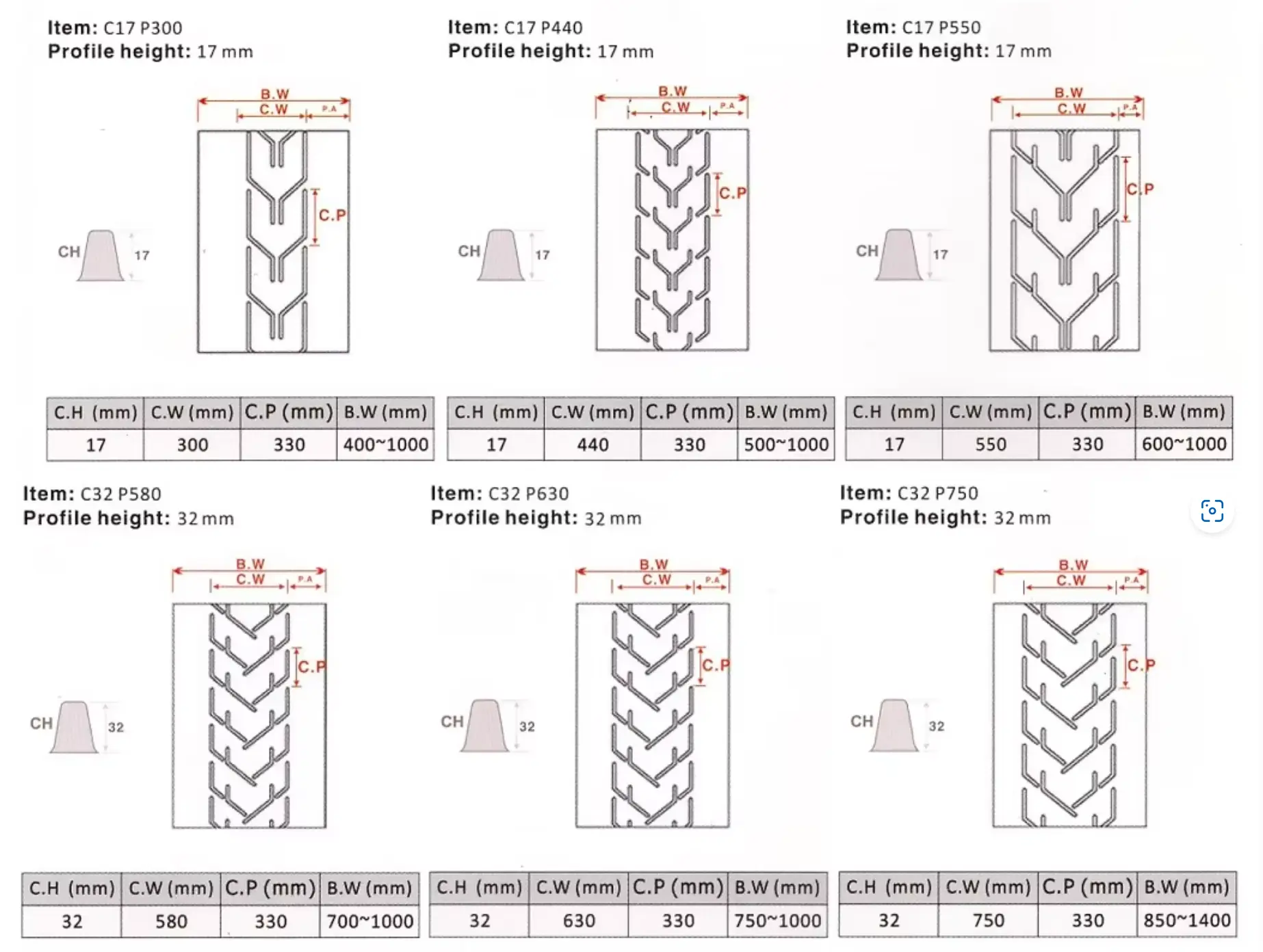
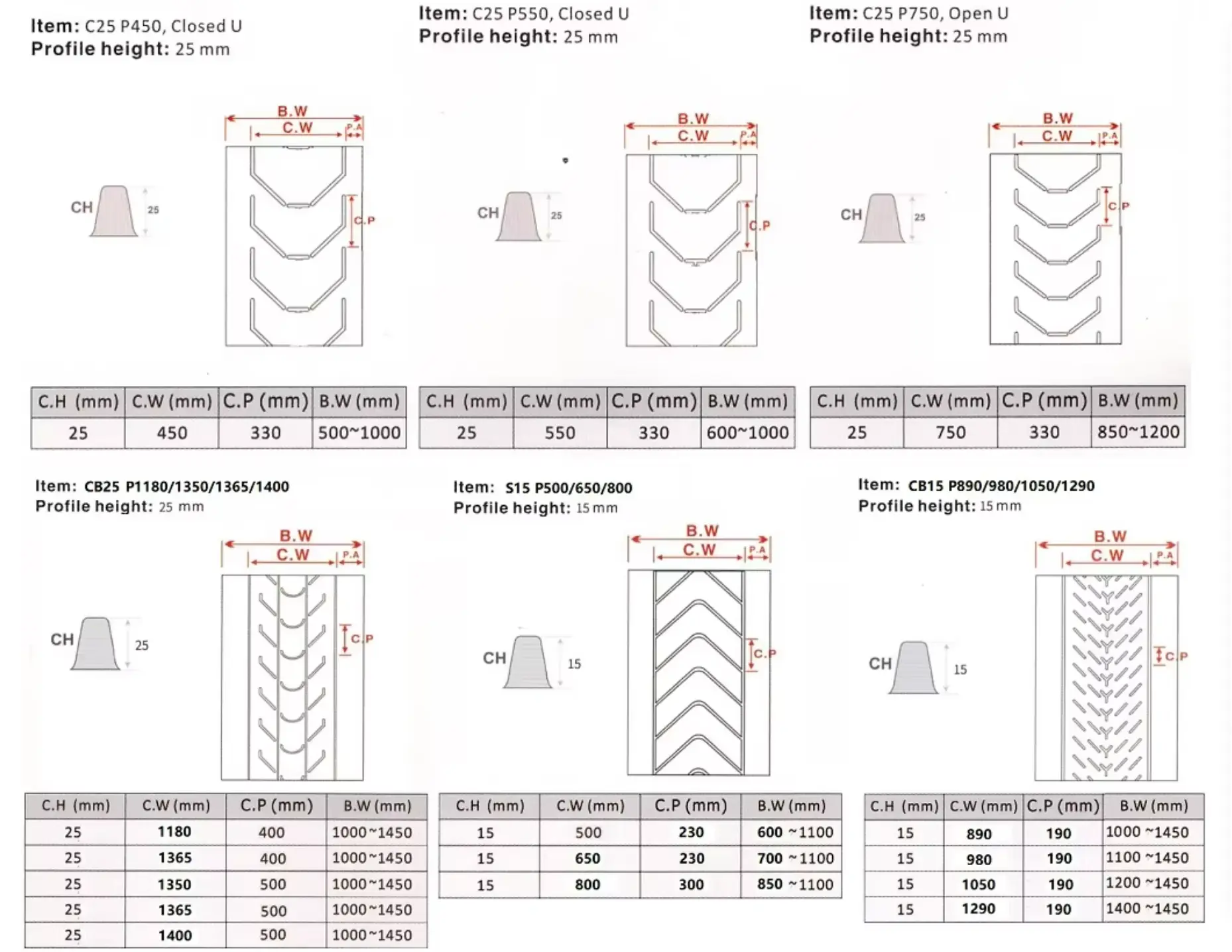
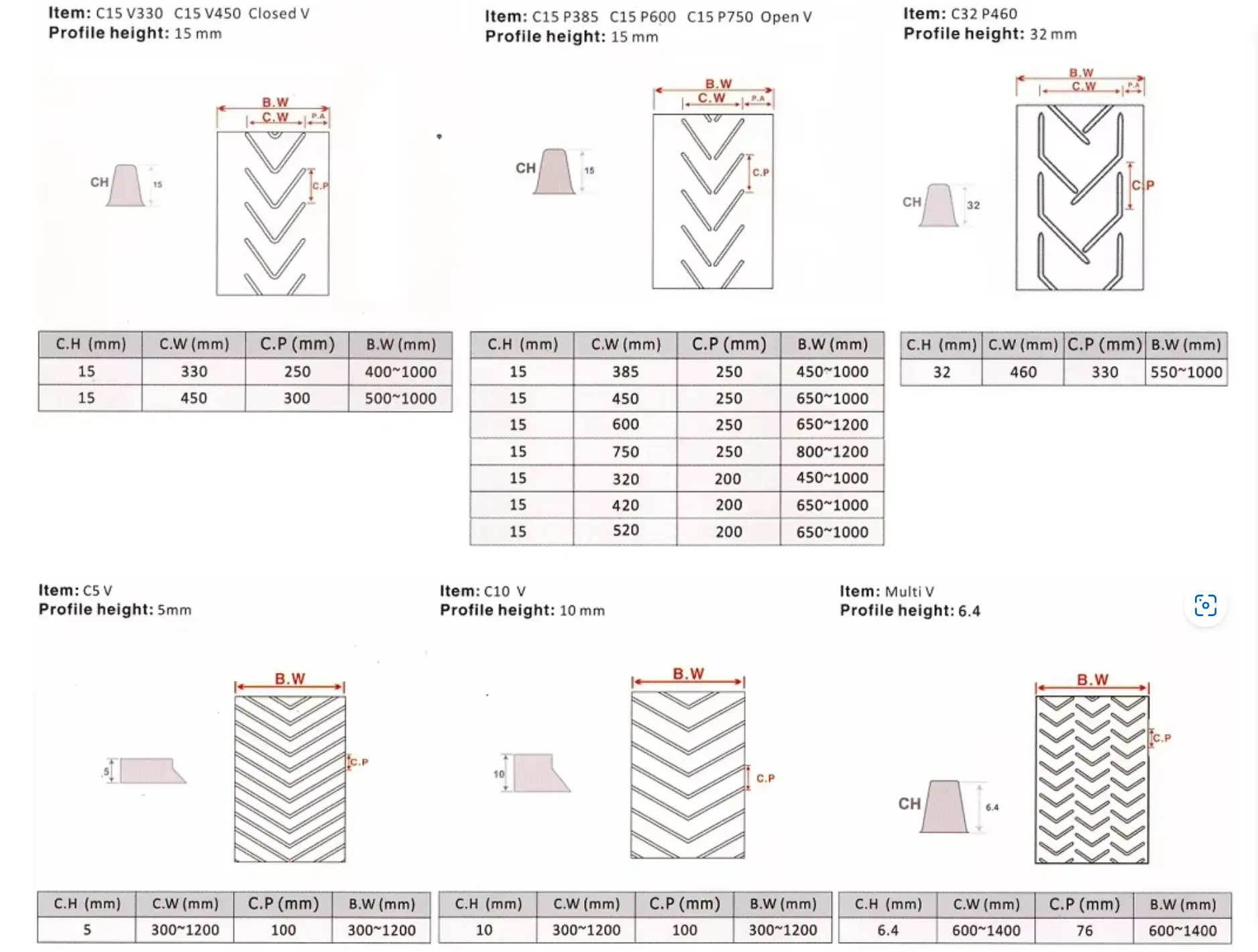
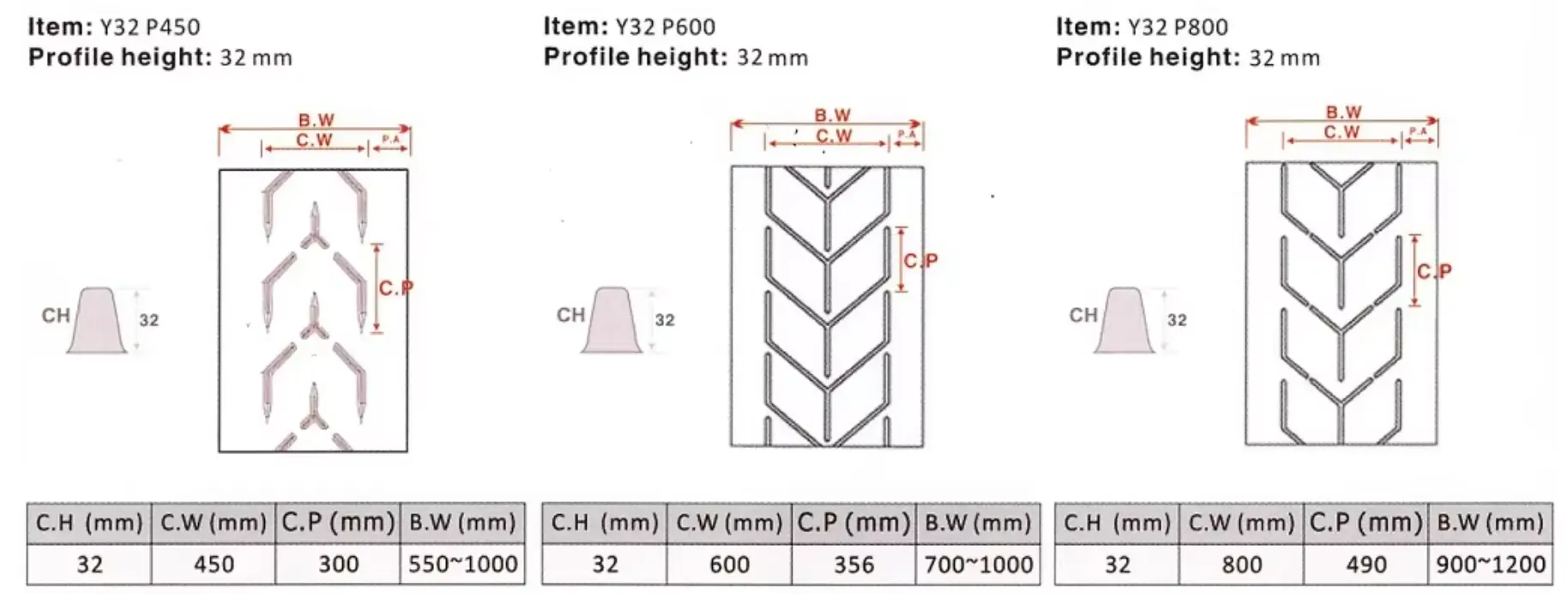
Material Selection & Production Process
1. Polyester Fabric Carcass
YUFENG Studded Conveyor Belt uses high-strength EP polyester fabric as the main tensile carcass, with 2–4 plies selected according to belt load and application requirements. The structure provides good dimensional stability, controlled elongation and sufficient tensile support for continuous conveying.
2. Cover Material Options
PVC is suitable for packaging, logistics and general industrial conveying where abrasion resistance, chemical resistance and easy cleaning are required. PU provides a suitable option for food processing, pharmaceuticals and oily materials, with food-contact grades available. Rubber is selected for heavy-duty applications requiring higher friction, impact resistance and heat resistance, while PE offers a lightweight, moisture-resistant and low-noise solution for tobacco, food and light-to-medium-duty conveying.
3. Integrated Stud Molding
The raised studs are formed together with the belt surface through precision molding and vulcanization rather than being separately glued or printed onto the belt. This integrated structure improves the connection between the studs and belt body, reducing the risk of premature peeling or cracking. Stud height, diameter, spacing and arrangement can be customized according to the conveyed product and equipment requirements.
4. Factory Quality Testing
Finished belts undergo tensile strength, abrasion, stud adhesion, low-temperature bending and surface friction testing. These checks are used to verify the mechanical properties, pattern integrity and running characteristics of each production batch before shipment.
Performance Verification & Field Results
1. Inclined Conveying Stability
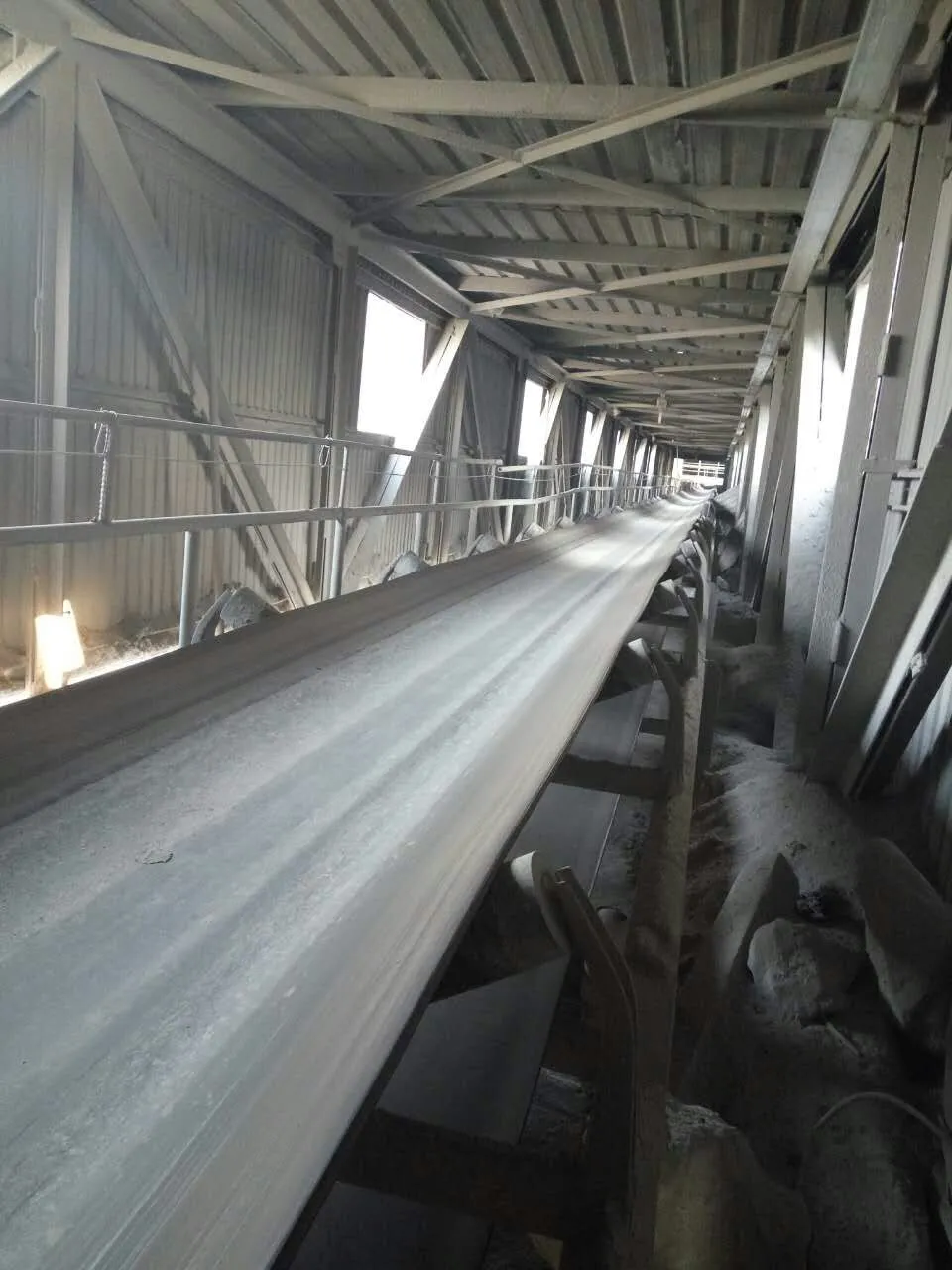
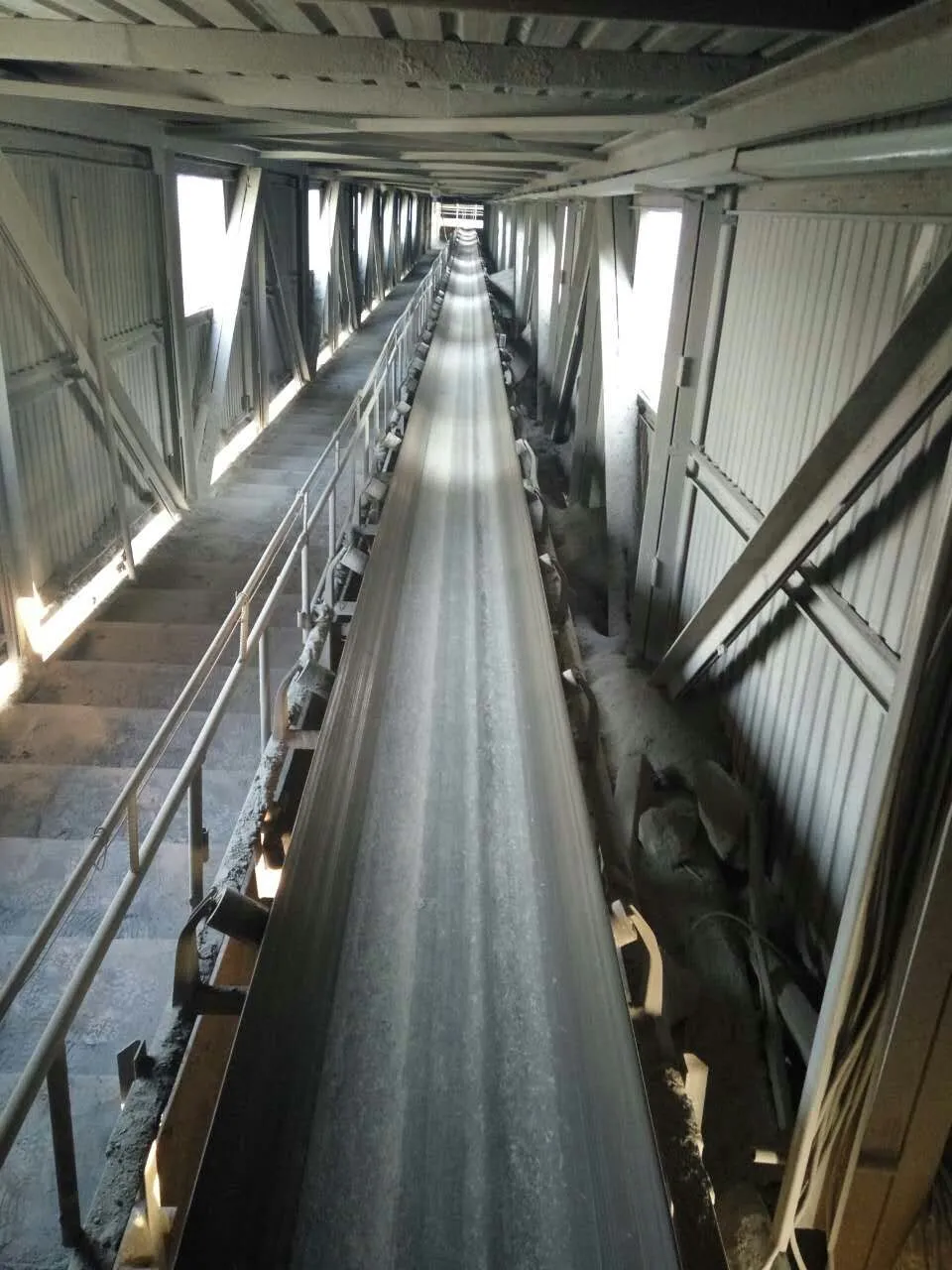
During six months of application tracking in woodworking, food processing and logistics environments, YUFENG Belt maintained stable product positioning on inclined sections up to 35°. Compared with flat belts that showed noticeable product movement on steeper sections, the distributed stud pattern provided additional localized contact without using continuous raised ribs.
2. Product Surface Protection
The separated stud structure reduces continuous contact between the belt pattern and the conveyed product. In field comparisons involving delicate and packaged products, the studded surface produced less visible scuffing and marking than conventional chevron patterns, making it suitable where product appearance and surface condition need to be maintained.
3. Surface Cleaning Performance
The open spaces between studs provide channels for dust, fines, water and residual materials to leave the carrying surface. In practical applications, this structure shortened routine cleaning periods compared with flat belts where material could accumulate across a continuous surface.
4. Wet Material Handling
Stud geometry provides localized contact with the conveyed product, while the spaces between studs allow water and sticky residues to move away from the belt surface. This combination can help maintain material positioning in wet or humid conveying conditions where conventional flat belts may experience reduced traction.
Application Cases
1. Wood Panel Sanding — Vietnam
A furniture manufacturer in Vietnam required a belt for MDF and HDF panel sanding equipment. The previous flat PVC belt allowed panels to shift during processing, affecting sanding consistency. YUFENG supplied a capsule-stud PVC belt with a dense pattern. After six months of operation, the belt maintained stable contact with the panels and supported more consistent sanding performance, with the customer reporting a 25% improvement in production efficiency.
2. Meat & Poultry Packaging — Europe
A European food processing facility needed to transport packaged meat products along an inclined section while maintaining hygiene and product appearance. YUFENG supplied a food-grade PU round-stud belt with an FDA-compliant material option. The stud pattern improved package positioning without the pronounced surface marking associated with some conventional raised patterns, while the open pattern simplified wash-down cleaning.
3. Tobacco Processing — China
A tobacco processing plant required stable conveying for loose leaf tobacco, cut filler and processed tobacco products. YUFENG supplied an oval-stud PE belt designed for controlled material movement and reduced surface accumulation. After 12 months of operation, the belt maintained its surface structure and supported stable conveying across different tobacco processing stages.
4. Application Verification
Available project photographs, production records and application reference materials can be provided for customer evaluation. Belt material, stud geometry and dimensions can also be matched to the customer's equipment and conveyed products before production.
Product Specifications
1. Pattern & Structural Parameters
| Parameter | Specification |
|---|---|
| Product | YUFENG Studded Conveyor Belt |
| Stud Shape | Round / Oval / Capsule / Custom |
| Stud Height | 0.5–8 mm, customizable |
| Stud Diameter | 3–20 mm, customizable |
| Stud Density | Customizable according to application |
| Belt Width | 300–2000 mm, custom sizes available |
| Belt Thickness | 3–12 mm, customizable |
| Carcass | EP polyester/nylon fabric, 2–4 plies |
| Cover Materials | PVC / PU / Rubber / PE |
2. Performance & Supply Parameters
| Parameter | Specification |
|---|---|
| Working Temperature | -10°C to +80°C for PVC/PU; -30°C to +100°C for Rubber |
| Tensile Strength | Up to 15 N/mm for standard PVC; higher options available |
| Core Performance | Localized grip, self-cleaning surface, abrasion resistance |
| Suitable Materials | Packaged goods, food products, wood panels, tobacco, bottles and electronic components |
| Target Industries | Woodworking, food processing, logistics, tobacco, bottling, agriculture and packaging |
| Production Standards | GB/T, ISO, DIN and applicable international standards |
| FDA Option | Available for food-grade PU and selected PVC grades |
| Factory Tests | Tensile strength, abrasion, stud adhesion, low-temperature bending and friction coefficient |
| Sample Service | Small samples available; freight paid by customer |
| MOQ | Negotiable; trial and bulk orders accepted |
| Lead Time | 15–20 working days for standard sizes; 20–35 days for custom orders |
| Warranty | 12 months under standard operating conditions and normal maintenance |
| Payment Terms | T/T, L/C at sight |
| Loading Port | Qingdao, China |
| Place of Origin | Qingdao, China |
Why Choose YUFENG Studded Conveyor Belt
1. Controlled Contact for Product Handling
The studded surface creates multiple localized contact points rather than a continuous raised pattern. This structure provides controlled traction for inclined conveying while reducing unnecessary contact with the product surface. It is suitable for packaged goods, food products, wood panels and other materials where stable handling and appearance are important.
2. Open Surface Structure for Easier Cleaning
The spacing between studs allows water, dust and fine residues to move away from the carrying surface. This helps simplify routine cleaning and supports applications requiring frequent wash-down or improved surface hygiene.
3. Multiple Materials for Different Equipment
PVC provides a practical solution for general industrial and logistics applications, PU is suitable for food and oil-contact environments, rubber is available for higher-friction and heavy-duty conditions, and PE provides a lightweight option for moisture-sensitive or low-noise conveying systems.
4. Customized Pattern & Factory Support
YUFENG can customize stud shape, height, diameter, density, belt width, thickness and material according to equipment and product requirements. Factory-direct production is supported by technical assistance covering material selection, pattern configuration, sample testing and application matching.
Suitable Applications
Our studded conveyor belt is especially recommended for:
|
Industry |
Application |
|
Woodworking |
Wide-belt sanding machines for MDF, HDF, plywood, furniture components |
|
Food Processing |
Meat/poultry packaging, snack food lines, bakery operations, fruit/vegetable handling |
|
Logistics & Sorting |
Parcel sorters, baggage handling, courier systems |
|
Tobacco Industry |
Loose leaf tobacco, cut filler, processed tobacco products |
|
Bottling & Canning |
Stable transport of bottles, jars, cans on inclined sections |
|
Agriculture |
Conveying fruits, vegetables, grain sacks without bruising or sliding |
|
Packaging |
Inclined conveyors moving packed boxes, plastic containers, shrink-wrapped products |
|
Automotive |
Small parts handling – fasteners, electrical components |
| SPECIFICATION | ||||||
| Total Tensile Strength (N/mm) | Fabric Type | No.of Fabric plies | Width (mm) | Length | Top Cover Thickness(mm) | Bottom Cover Thicknes(mm) |
| 200-800 | EP100 | 2-10 | 350-2000 | 10-400 | 2-12 | 1-5 |
| 315-1250 | EP150 | 2-10 | 350-2000 | 10-400 | 2-12 | 1-5 |
| 400-1500 | EP200 | 2-10 | 350-2000 | 10-400 | 2-12 | 1-5 |
| 500-2000 | EP250 | 2-10 | 350-2000 | 10-400 | 2-12 | 1-5 |
| 500-2000 | EP300 | 2-6 | 350-2000 | 10-400 | 2-12 | 1-5 |
| 500-2000 | EP400 | 2-6 | 350-2000 | 10-400 | 2-12 | 1-5 |
| 630-2500 | EP500 | 2-6 | 350-2000 | 10-400 | 2-12 | 1-5 |
|
|
EP600 | 2-6 | 350-2000 | 10-400 | 2-12 |
|
Frequently Asked Questions
Q1: What makes a studded conveyor belt different from chevron and diamond-pattern belts?
The main difference is how the belt surface interacts with the conveyed product. Chevron belts use continuous raised ribs to move loose bulk materials on inclined conveyors, while diamond-pattern belts create broad anti-slip contact across the belt surface.
A belt uses individually molded round, oval or capsule-shaped studs to create multiple point-contact areas. This provides controlled grip while reducing the amount of surface pressure applied to individual products, making it particularly suitable for packaged goods, delicate products, irregular items and applications where surface marking must be minimized.
Q2: How do I select the right stud shape for my application?
Round studs are a versatile option for packaging, logistics, bottling and general product conveying because their curved profile provides balanced grip in multiple directions. Oval studs provide more directional traction and are suitable for tobacco, grain and regularly shaped products that require stable positioning. Capsule studs are designed for applications such as woodworking and sanding where consistent contact and workpiece stability are important. YUFENG can also customize stud geometry, height, diameter and spacing according to product shape, conveying angle and belt speed.
Q3: Can belts be used for food processing?
Yes. YUFENG offers PU and selected PVC constructions suitable for food-contact applications, with FDA-compliant options available for customers requiring specific food-grade materials. The smooth material surface is easy to clean, while the spacing between the molded studs helps reduce the accumulation of moisture and product residue.
These configurations can be used for packaged food, meat and poultry processing, bakery products, snack foods and other applications where hygiene and controlled product handling are important.
Q4: Why does the studded surface have a self-cleaning effect?
Unlike a flat belt surface where water, dust and sticky residues can remain trapped against the conveyed product, the spaces between individual studs form open channels across the belt surface. During operation, loose particles and liquids can move through these gaps instead of building up around the contact points.
This helps maintain consistent traction and makes routine cleaning easier, particularly in wet processing, woodworking, agricultural and recycling applications.
Q5: What parts of a belt can be customized?
YUFENG supports customization of the belt structure and surface pattern according to the customer's equipment and material requirements. Available options include stud shape, stud height, stud diameter, stud density, belt width, belt thickness, carcass construction and cover material.
PVC, PU, rubber and PE constructions can be selected for different requirements involving food contact, abrasion resistance, chemical exposure, impact resistance or moisture protection. Custom stud arrangements and belt dimensions can also be developed for specific conveyor systems.
Q6: What conveying angle can a studded belt handle?
A studded conveyor belt can provide stable product handling on inclined conveyors, with practical performance depending on the conveyed material and belt configuration. Applications with inclines of up to approximately 35° can be considered, but the actual operating angle should be determined together with product weight, surface condition, shape, belt speed and stud geometry.
For steep conveying, taller or more densely arranged studs may improve retention, while sensitive products may require a lower-contact configuration to balance grip and product protection.
Q7: How should a studded conveyor belt be maintained?
Routine maintenance mainly involves checking the condition of the molded studs, removing material trapped between the studs and maintaining correct belt tension. Stud wear should be monitored during regular inspections, especially in abrasive applications, and damaged sections should be addressed before they affect product stability.
Keeping the rollers, scrapers and belt surface clean also helps reduce unnecessary wear. Because the studs are integrally molded into the belt rather than separately bonded to the surface, there is no need for routine inspection of glued-on surface blocks.
Q8: Are the studs molded together with the belt or attached afterward?
YUFENG belts use an integrated molding and vulcanization process in which the studs are formed as part of the belt surface structure. This construction creates a stronger connection between the studs and the cover material than surface blocks that are simply glued or printed onto the belt.
Proper molding parameters help reduce the risk of stud peeling and premature cracking during repeated bending, while allowing the stud dimensions and arrangement to be controlled during production.
Q9: Which cover material should I choose: PVC, PU, rubber or PE?
The appropriate cover material depends on the working environment and conveyed product. PVC is a practical choice for general industrial conveying where abrasion resistance, chemical resistance and easy cleaning are required. PU is better suited to food processing and applications requiring oil resistance and a food-grade option.
Rubber provides higher friction, impact resistance and heat resistance for demanding industrial applications, while PE is useful where lightweight construction, moisture resistance and lower operating noise are preferred. YUFENG can recommend the appropriate material based on product characteristics and equipment conditions.
Q10: Can you provide samples before a bulk order?
Yes. Small samples are available for customers who need to evaluate stud geometry, material properties, surface grip and conveying performance before placing a production order. Sample specifications can be selected according to the intended application, including stud shape, belt material and surface configuration.
Customers can use the sample for equipment matching and product handling trials, while the final production specification can then be confirmed based on the test results.
Application & Selection Guidance
For the best belt configuration, customers should provide the conveyed product, product dimensions and weight, conveying angle, belt speed, working temperature and whether the application involves water, oil, dust or food-contact requirements. These factors directly affect the selection of stud shape, stud height, spacing, cover material and carcass construction. YUFENG can use these operating parameters to recommend a suitable belt configuration and provide customized production support.
Request a Studded Conveyor Belt Solution
If you need a conveyor belt that combines controlled product grip, reduced surface marking and easier cleaning, contact YUFENG with your conveyor specifications and application requirements. We can provide suitable stud patterns, material options, customized dimensions, samples and factory quotations for woodworking, food processing, packaging, logistics, tobacco, agriculture and other industrial conveying applications.
Hot Tags: Studded Conveyor Belt Manufacturer, Studded Conveyor Belt Supplier, Rubber Studded Conveyor Belt
Send Inquiry
Contact Info
-
Address
Xiagou Village, West Coast New Area, Huangdao District, Qingdao City, Shandong Province, China
-
Tel
-
Email
Get a Tailored Quote for Your Conveyor Belt Project
Why Choose Qingdao Zhongye Yufeng Tape:
✔ Full range of belts — Steel cord, fabric, pipe, sidewall, heat-resistant, PVC/PVG mining, chevron, oil-resistant and more.
✔ Stable quality & competitive prices — ISO9001, CE, MSHA, TUV certified; ex-factory prices with fast delivery.
✔ Free sample testing — Verify quality before you commit; customized production supported.
✔ 14 years' experience — Serving coal, mining, metallurgy, port, power, construction and grain industries worldwide.
Ready to get started? Complete the form below and our team will respond within 24 hours with a custom recommendation.
News Recommendations