English
- English
- Español
- Português
- русский
- Français
- 日本語
- Deutsch
- tiếng Việt
- Italiano
- Nederlands
- ภาษาไทย
- Polski
- 한국어
- Svenska
- magyar
- Malay
- বাংলা ভাষার
- Dansk
- Suomi
- हिन्दी
- Pilipino
- Türkçe
- Gaeilge
- العربية
- Indonesia
- Norsk
- تمل
- český
- ελληνικά
- український
- Javanese
- فارسی
- தமிழ்
- తెలుగు
- नेपाली
- Burmese
- български
- ລາວ
- Latine
- Қазақша
- Euskal
- Azərbaycan
- Slovenský jazyk
- Македонски
- Lietuvos
- Eesti Keel
- Română
- Slovenski
- मराठी
- Srpski језик
Factory Direct Rubber Elevator Belt for Heavy Duty Conveying Applications
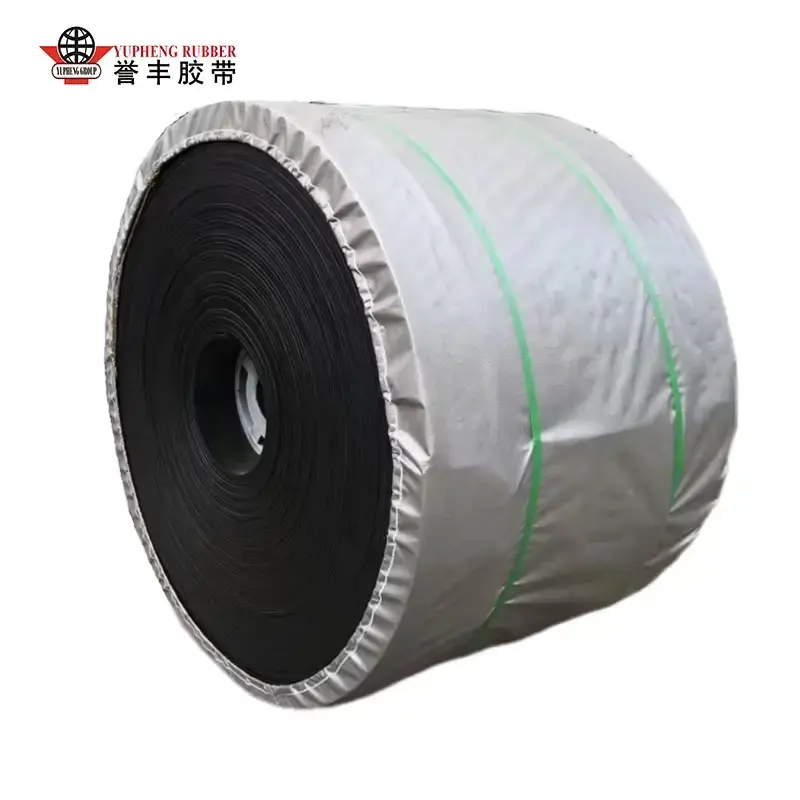
YUFENG Rubber Elevator Belt, also known as bucket elevator belt, is a reinforced rubber belt designed for vertical lifting systems that transport grain, cement, aggregate, coal, minerals, and other bulk materials. The belt acts as the continuous load-bearing element for bucket elevators and must withstand repeated bending around pulleys together with continuous vertical tension.
YUFENG supplies NN, EP and steel cord elevator belt constructions with different elongation, tensile strength and lifting-height capabilities. The belt can be supplied with customized bucket mounting holes, functional rubber compounds, edge reinforcement, fixed lengths, and pre-punching according to elevator dimensions and bucket specifications.
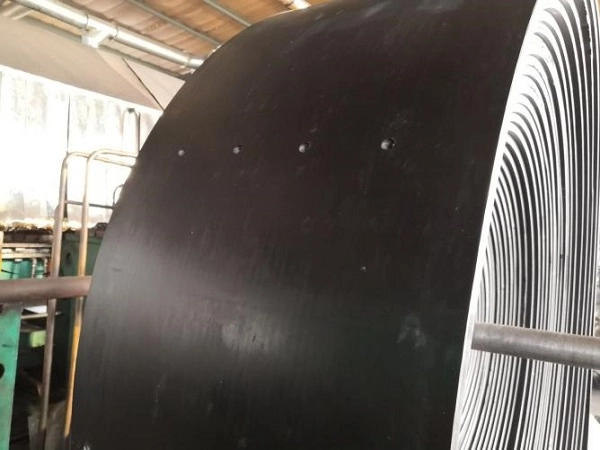
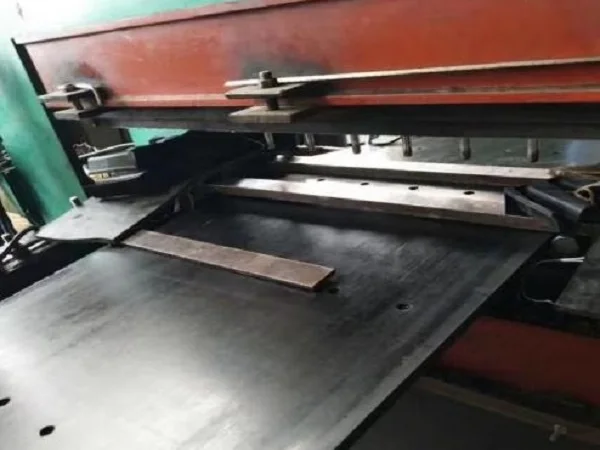
Elevator Belt Classification by Reinforcing Carcass
NN Rubber Elevator Belt
NN nylon fabric provides good flexibility and impact resistance with a relatively economical construction. It is suitable for small and medium bucket elevators, particularly grain and light-material applications with lifting heights up to approximately 30 m.
EP Rubber Elevator Belt
EP polyester fabric provides lower permanent elongation and better moisture and mildew resistance than conventional cotton-based structures. It is suitable for medium lifting heights of approximately 30–80 m and is widely used for cement, sand, aggregate, and other bulk material elevators.
Steel Cord Rubber Elevator Belt
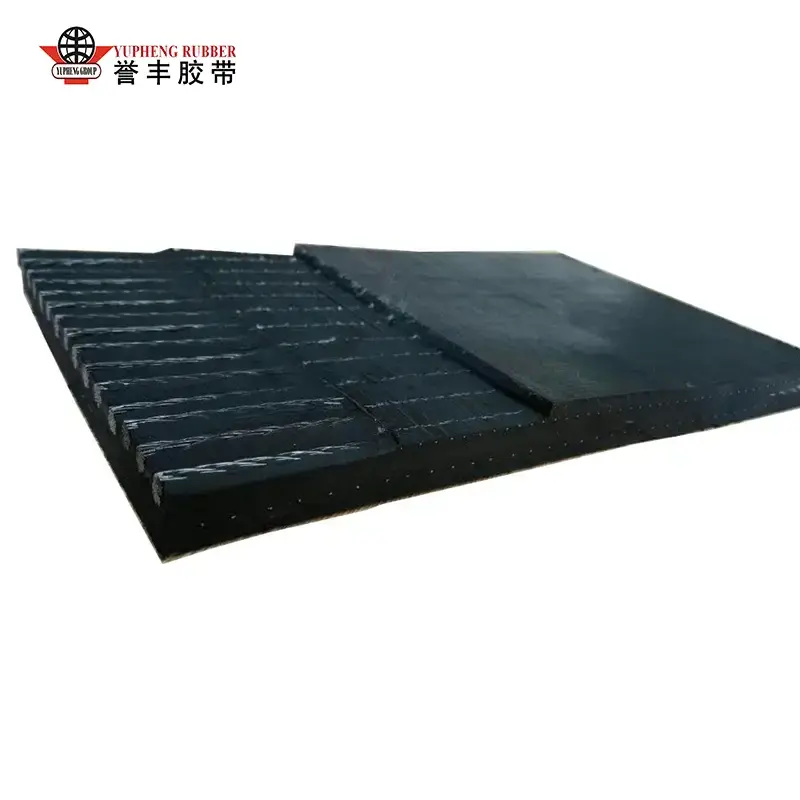
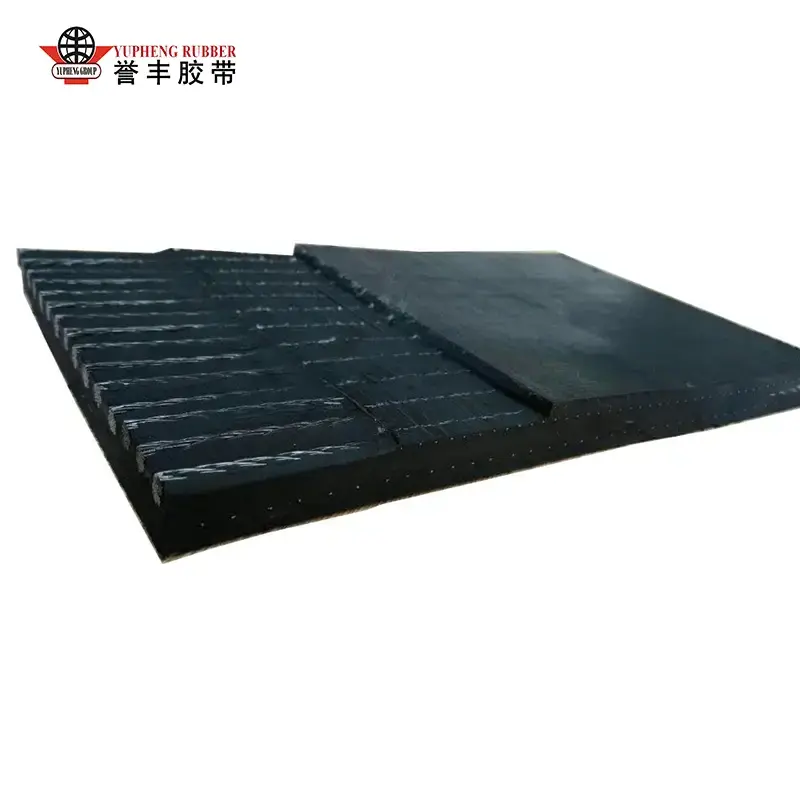
Steel cord reinforcement provides very high tensile strength and extremely low elongation for demanding vertical lifting applications. It is suitable for large-capacity elevators and ultra-high lifting systems above approximately 80 m where frequent tension adjustment must be minimized.
| Belt Carcass Type | Core Characteristic | Applicable Working Condition |
|---|---|---|
| NN Rubber Elevator Belt | Good flexibility, economical construction, moderate elongation | Low and medium lifting height, grain and light material elevators |
| EP Rubber Elevator Belt | Low permanent elongation, moisture and mildew resistance | Medium lifting height, cement, sand and aggregate elevators |
| Steel Cord Elevator Belt | Very low elongation, high tensile strength | Ultra-high lifting height and heavy-duty mineral elevators |
Elevator Belt Specifications and Dimensions
Carcass Grade
YUFENG provides EP100–EP1000, NN100–NN800 and ST630–ST2000 carcass grades. The appropriate grade should be selected according to elevator height, bucket load, material density, belt speed and required tensile strength.
Belt Width
Available belt widths range from approximately 300 mm to 1600 mm. The belt width should be matched with bucket dimensions, material throughput, elevator casing width and head and tail pulley configuration.
Cover Thickness
Cover rubber thickness can be customized from approximately 3–10 mm according to material abrasion, impact level and operating conditions.
Bucket Mounting Holes
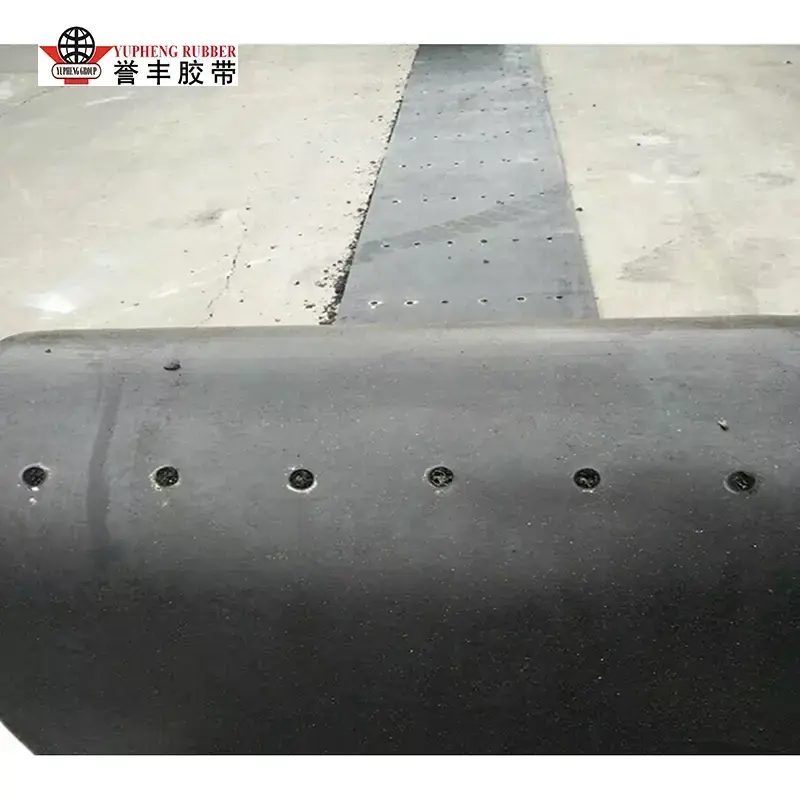
YUFENG supports CNC bucket-hole punching with round or square holes. Hole diameter, spacing and position can be processed according to the bucket drawing to provide accurate mounting points for elevator buckets.
Elevator Belt Types for Different Materials and Environments
General Wear Resistant EP Elevator Belt
The standard wear-resistant elevator belt uses natural or suitable synthetic rubber cover compounds for general bulk material lifting. It is suitable for cement, sand, aggregate and similar materials under normal temperature conditions, with a typical operating range of -20°C to +60°C.
Food Grade Grain Elevator Belt
Food-grade elevator belts use suitable non-toxic and low-odor rubber compounds for grain handling applications. They are designed for rice, wheat, corn and similar agricultural materials where cleanability and applicable food-contact requirements are important.
Flame Retardant Anti-Static Elevator Belt
This configuration uses flame-retardant and anti-static rubber compounds for underground mining applications where fire resistance and static dissipation are required. Applicable models can be manufactured according to MT/T668 coal mine safety requirements.
High Temperature Resistant Elevator Belt
EPDM-based heat-resistant cover rubber is used for applications involving hot materials such as cement clinker. Suitable constructions can handle material temperatures up to approximately 180°C depending on the actual operating conditions and belt formulation.
Oil and Corrosion Resistant Elevator Belt
NBR-based cover rubber provides better resistance to mineral oil, lubricants and selected chemical media. This configuration is suitable for chemical plants and raw-material elevators where exposure to oils or corrosive substances may affect conventional rubber compounds.
Steel Cord Ultra-High Lifting Elevator Belt
The steel cord construction is designed for high lifting towers and large-capacity elevators. Its very low elongation and high tensile strength help maintain belt stability under long vertical lifting distances and heavy continuous bucket loading.
Bucket Mounting and Structural Customization
Carcass Selection
Customers can select NN nylon fabric, EP low-stretch polyester fabric or galvanized steel cord according to elevator height, bucket load and tensile requirements.
Hole Pattern Customization
Round or square bucket mounting holes can be CNC punched according to customer drawings. Hole diameter, center distance and longitudinal spacing can be adjusted to match the bucket mounting system.
Surface Configuration
The belt can be supplied with a smooth surface or selected anti-slip patterned surface depending on the elevator design and material handling requirements.
Functional Rubber Compound
Wear-resistant, food-grade, flame-retardant, high-temperature and oil-resistant rubber compounds can be selected according to the conveyed material and operating environment.
Edge Reinforcement
Thickened anti-tear edge rubber can be incorporated to improve resistance to repeated bending and edge stress around the head and tail pulleys.
Fixed-Length and Pre-Punching Service
YUFENG can supply fixed-length sections together with pre-punched bucket holes, allowing the finished belt to be prepared according to the elevator installation dimensions before shipment.
Elevator Belt Structure and Manufacturing Control
High-Tensile Carcass
High-tenacity NN and EP fabrics or high-strength galvanized steel cords form the primary tensile structure of the elevator belt. The carcass is selected according to the required lifting distance and bucket loading conditions.
Functional Cover Rubber
Virgin natural rubber, NBR, EPDM and other suitable compounds can be selected for wear, temperature, oil, food-contact and flame-retardant requirements.
High-Bond Skim Rubber
A dedicated high-adhesion skim rubber is used between reinforcement layers and the cover to improve carcass-to-rubber bonding and reduce delamination around areas subjected to repeated tension.
Bucket Hole Reinforcement
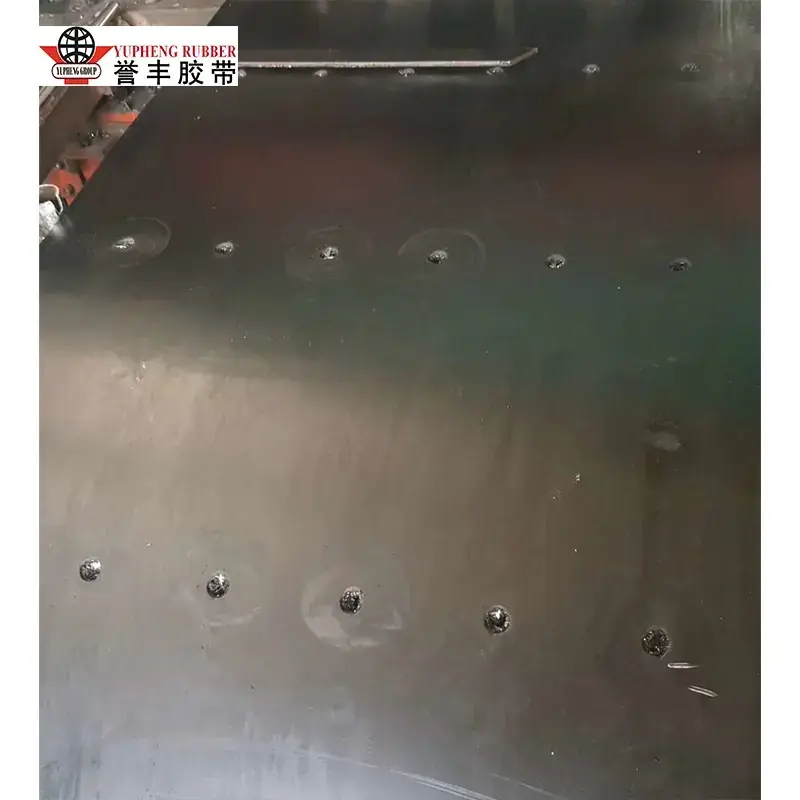
For heavy bucket loads, the area around the mounting holes can be locally reinforced with additional rubber to reduce edge cracking and maintain bolt fastening stability under rated tension.
Raw Material Inspection
Fabric, steel cord and rubber materials are sampled for tensile strength, elongation and peel strength before entering the vulcanization production line. Materials that fail the required inspection criteria are not released for production.
Elevator Belt Performance for Vertical Operation
| Performance Item | Standard Requirement | Test Standard |
|---|---|---|
| Elongation at Break of EP Carcass | ≥300% | ISO 6259 |
| Interlayer Peel Strength | ≥12 N/mm | ISO 2411 |
| Permanent Elongation Under Rated Load | ≤2.5% | DIN 22102 |
| Cover Rubber Abrasion Loss | ≤0.8 cm³/1.61 km | ISO 4649 |
| Punch Hole Edge Tear Resistance | No crack under rated tension | Factory Dedicated Test |
Actual belt performance depends on the carcass grade, belt width, cover thickness, bucket loading, belt speed, elevator height, pulley diameter and operating environment. YUFENG can provide product-specific factory test data according to the selected configuration.
Standards and Certification Documentation
General Conveyor Belt Standards
YUFENG Rubber Elevator Belt products are manufactured according to applicable ISO 14890, DIN 22102 and GB/T 7984 requirements. Steel cord constructions can be manufactured according to DIN 22131 where applicable.
Food Contact Requirements
Food-grade elevator belt materials can be selected according to applicable FDA and LFGB food-contact requirements. The specific certification and documentation depend on the selected material formulation and destination market.
Coal Mine Safety Requirements
Flame-retardant and anti-static elevator belt configurations for underground mining can be manufactured according to MT/T668 requirements, subject to the final product configuration and applicable testing scope.
Available Documentation
Depending on the ordered configuration, YUFENG can provide ISO9001 quality management documentation, CE export documentation, SGS material performance reports, food-contact safety documentation, coal mine flame-retardant safety certificates and factory product test reports.
Elevator Belt Splicing and Installation
Hot Vulcanization Splicing
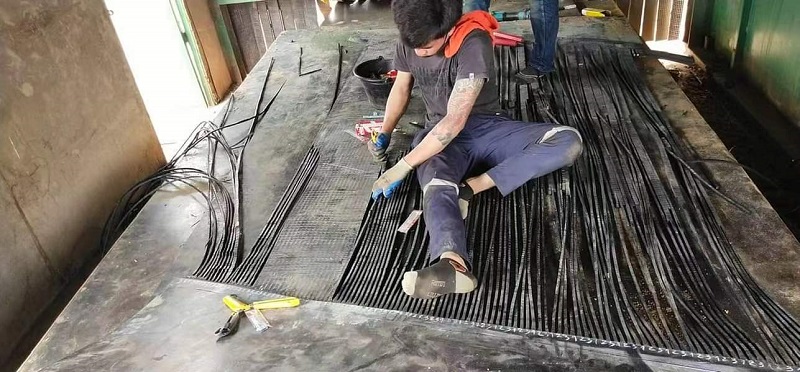
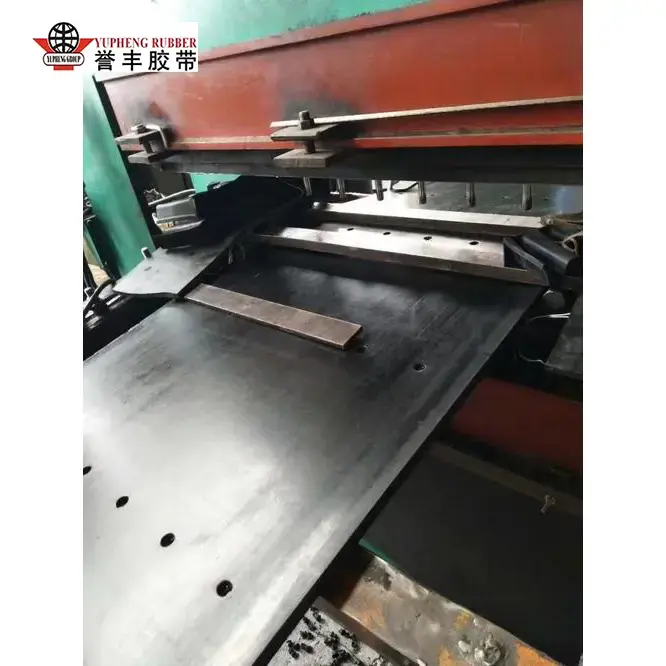
Hot vulcanization is recommended for permanent elevator belt joints. The belt ends are prepared according to the fabric ply or steel cord structure while avoiding damage to adjacent bucket mounting holes. Matching high-adhesion skim rubber is placed between the joint layers, followed by controlled heating and pressure in a dedicated flat vulcanizer.
Mechanical Fastener Splicing
Special elevator belt mechanical fasteners can be used for emergency repairs where rapid installation is necessary. This method is suitable for temporary or short-term operation and is generally not recommended as the permanent joint solution for ultra-high lifting and heavy-load elevator systems.
Pulley Selection
Appropriately sized head and tail pulleys should be selected to reduce repeated bending fatigue in the belt. Pulley diameter should be matched with the carcass construction and belt specification.
Belt Tension Adjustment
The elevator tensioning system should be adjusted according to the selected belt construction and rated operating requirements. Proper tension helps maintain stable bucket alignment and reduces unnecessary belt movement.
Bucket Mounting Position
Bucket mounting holes should be accurately matched with the elevator bucket dimensions. Feeding conditions should also be controlled to avoid direct impact from sharp or oversized materials onto the bucket mounting areas.
Matching Bucket Elevator Components
Conveyor Belt Series
YUFENG can supply Fabric Conveyor Belt, Steel Cord Conveyor Belt, Patterned Conveyor Belt and Rough Top Conveyor Belt for conveying systems that combine vertical lifting with horizontal material transportation.
Roller and Pulley Components
Matching products include trough idlers, HDPE anti-corrosion rollers and elevator head pulleys for corresponding material handling systems.
Rubber Accessories
Wear-resistant rubber sheets, vulcanization repair adhesives and elevator belt fasteners are available for installation, maintenance and field repair requirements.
HDPE Pipeline Series
HDPE water pipes and dredge pipes can be supplied for auxiliary fluid transportation applications in mining and industrial projects requiring combined procurement.
Custom Processing
YUFENG can customize belt width, thickness, bucket hole diameter, hole spacing, fixed length and functional rubber formulation according to elevator drawings and operating conditions.
Elevator Belt Packaging and Storage
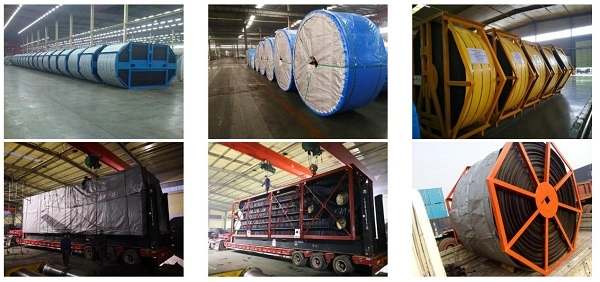
Narrow Width Rolls
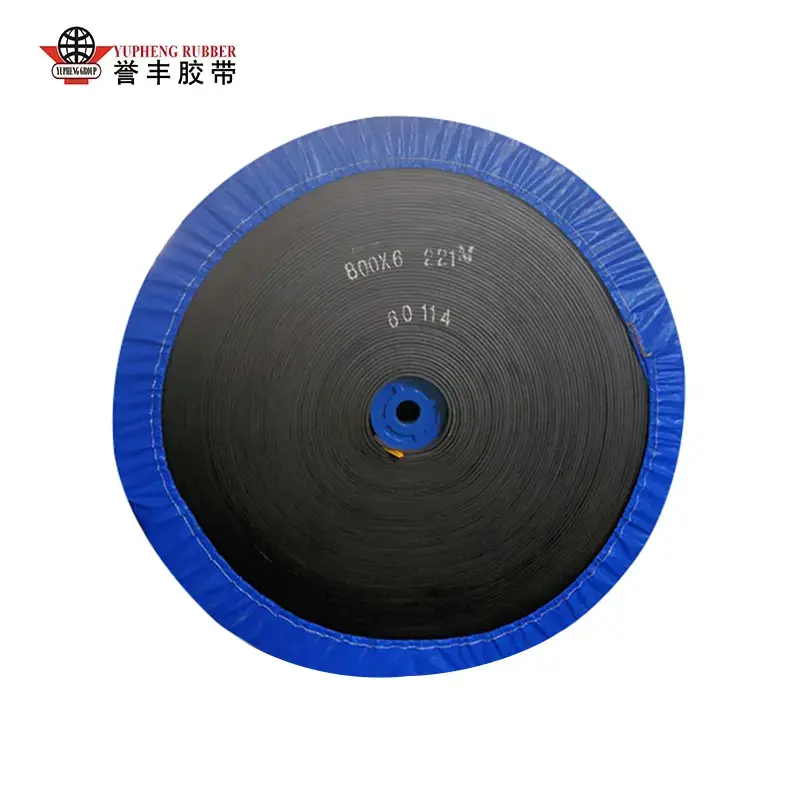
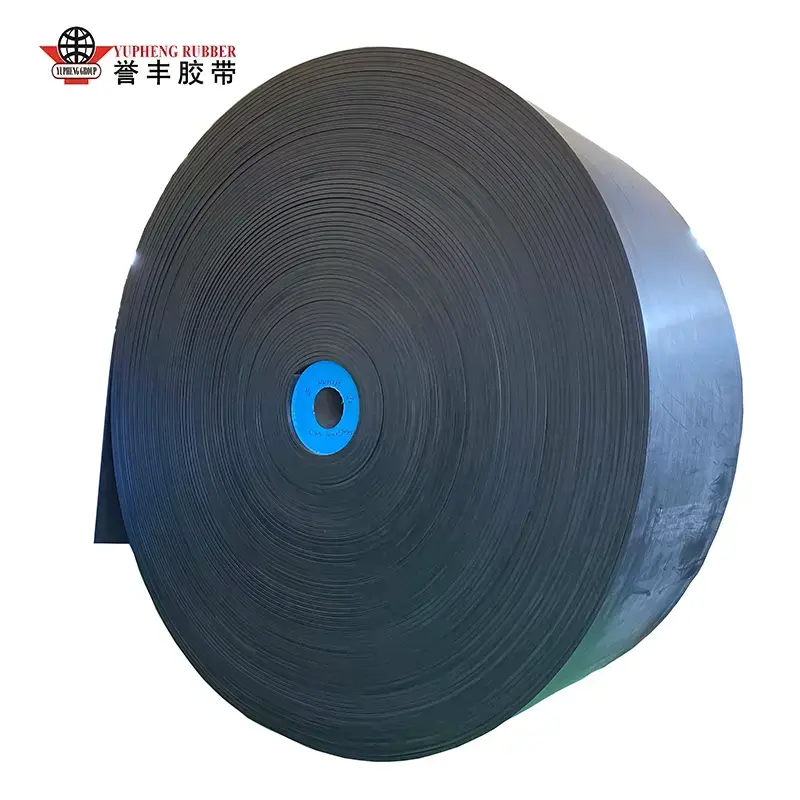
Elevator belts with widths of approximately 300–800 mm are wound on solid paper cores and protected with waterproof plastic film and woven outer packaging.
Wide Steel Cord Rolls
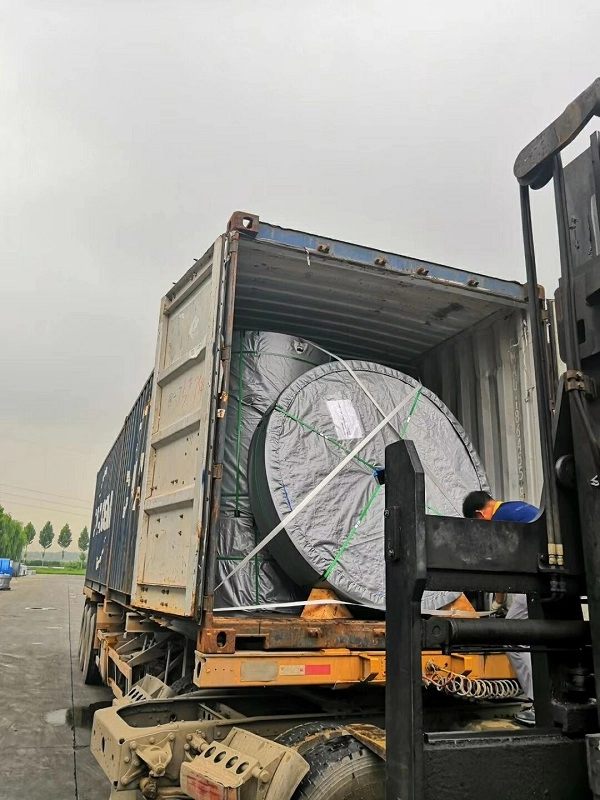
Heavy steel cord elevator belts with widths from approximately 1000–1600 mm can be secured with reinforced steel strapping, protective tarpaulin and heavy wooden pallets for container transportation.
Pre-Punched Belt Sections
Custom pre-punched sections are protected with separate foam or cushioning materials to reduce deformation and damage around the bucket mounting holes during handling.
Storage Requirements
The belts should be stored horizontally in a dry and ventilated warehouse with a recommended stacking height of no more than 1.2 m. Long-term exposure to direct sunlight, rainwater and chemical solvents should be avoided to reduce rubber aging and material deterioration.
How to Select the Correct Rubber Elevator Belt
Confirm Elevator Height and Capacity
The total lifting height and hourly material throughput are the first parameters for selecting the carcass grade. NN is suitable for smaller elevators, EP for many medium-height applications, and steel cord for higher tensile-load and ultra-high lifting systems.
Confirm Bucket Hole Requirements
Provide bucket mounting hole diameter, spacing, quantity and drawing dimensions so that the belt punching pattern can be matched accurately to the bucket system.
Confirm Material and Temperature
Material type, particle size, abrasiveness, oil exposure, chemical contact and temperature determine the appropriate cover rubber formulation.
Confirm Pulley and Installation Dimensions
Head and tail pulley diameters, belt width, elevator casing dimensions and tensioning arrangement should be considered together to ensure suitable belt operation and bending performance.
Request a Rubber Elevator Belt Quotation
For an accurate quotation, provide the carcass type, belt width, total elevator height, bucket hole size and spacing, material type, working temperature, conveying capacity, total order quantity and destination port.
YUFENG technical engineers can evaluate the appropriate carcass grade, cover thickness, bucket punching configuration and functional rubber formulation according to the complete elevator operating conditions.
YUFENG Global Contact Information
jayce@yuphengbelt.com
WhatsApp / WeChat / Mobile
+86 15318787602
Factory Address
Xiagou Villege, ETDZ, Qingdao, Shandong, China
- View as
Heat Resistant Bucket Elevator Belt
YUFENG Heat Resistant Bucket Elevator Belt is designed for enclosed bucket elevators handling hot bulk materials at 120–175°C. Its dual-layer thermal barrier structure protects the carcass from radiant heat, reducing scorching, delamination and bolt-hole cracking. Available in fabric and steel cord versions, it supports medium to ultra-high lifting applications with durable, stable performance.
Fabric Bucket Elevator Belt
Designed for efficient vertical material handling, YUFENG Fabric Bucket Elevator Belt provides a lightweight and flexible solution for medium- and low-height bucket elevator systems. Its multi-layer dipped fabric carcass and high-strength bolt-holding rubber compound deliver reliable performance at lifting heights of 0–60m, making it suitable for grain, chemical powder and small aggregate conveying. Customized wear-resistant, oil-resistant and low-temperature rubber compounds are also available.
Steel Cord Bucket Elevator Belt
For high-height and heavy-duty vertical conveying, YUFENG Steel Cord Bucket Elevator Belt provides ultra-low elongation, high tensile strength and strong transverse rigidity. Its densely arranged longitudinal steel cord carcass supports stable operation at lifting heights up to 100m, while customized heat-resistant and flame-retardant rubber compounds meet demanding applications in cement, mineral and grain industries.
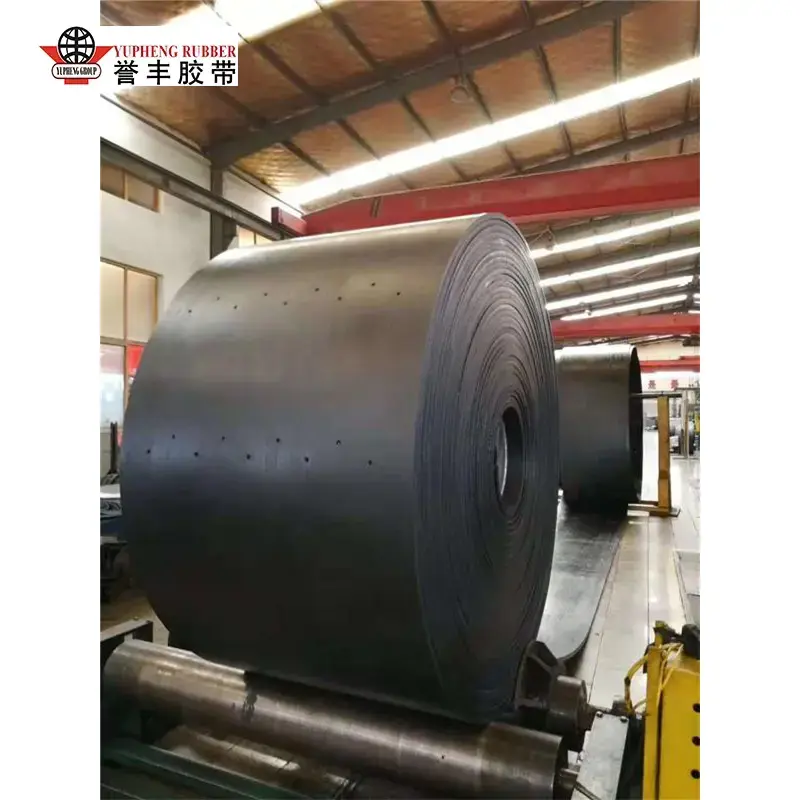
General Elevator Belt
For bucket elevator systems requiring reliable vertical lifting, YUFENG General Elevator Belt provides a durable and cost-effective traction solution. Field-tested across grain, cement and mining applications, it delivers less than 0.5% elongation under rated load and supports fabric-core or steel-cord constructions, precision bolt-hole punching and CBS protection. Available in customized configurations for diverse vertical conveying requirements.
YUFENG is a professional Rubber Elevator Belt manufacturer and supplier in China. We have an experienced sales team, professional technicians, and an after-sales service team.
News Recommendations