English
- English
- Español
- Português
- русский
- Français
- 日本語
- Deutsch
- tiếng Việt
- Italiano
- Nederlands
- ภาษาไทย
- Polski
- 한국어
- Svenska
- magyar
- Malay
- বাংলা ভাষার
- Dansk
- Suomi
- हिन्दी
- Pilipino
- Türkçe
- Gaeilge
- العربية
- Indonesia
- Norsk
- تمل
- český
- ελληνικά
- український
- Javanese
- فارسی
- தமிழ்
- తెలుగు
- नेपाली
- Burmese
- български
- ລາວ
- Latine
- Қазақша
- Euskal
- Azərbaycan
- Slovenský jazyk
- Македонски
- Lietuvos
- Eesti Keel
- Română
- Slovenski
- मराठी
- Srpski језик
Professional Manufacturer of Training and Aligning Idler Roller for Conveyor Belt Tracking Systems
YUFENG Training and Aligning Idler Roller, also known as self-training centering idler, friction self-aligning roller, or belt tracking idler, is designed to help correct lateral belt deviation during conveyor operation. It is mainly installed on long-distance belt conveyors where continuous belt tracking is important for reducing material spillage, edge wear, and unstable belt movement.
The roller assembly normally consists of a main carrying roller, vertical guide rollers, and a swingable support frame. When the conveyor belt moves away from its intended centerline, the guide roller receives lateral force and causes the supporting frame to swing, generating a corrective force that guides the belt back toward the designed running position.
YUFENG provides friction training idlers, conical training idlers, V-type return aligning idlers, galvanized configurations, HDPE versions, and special guide roller constructions for mining, cement, port, chemical, and other bulk material conveying systems.
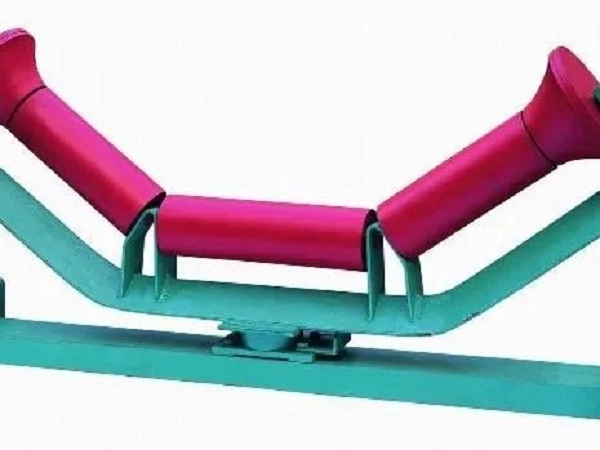
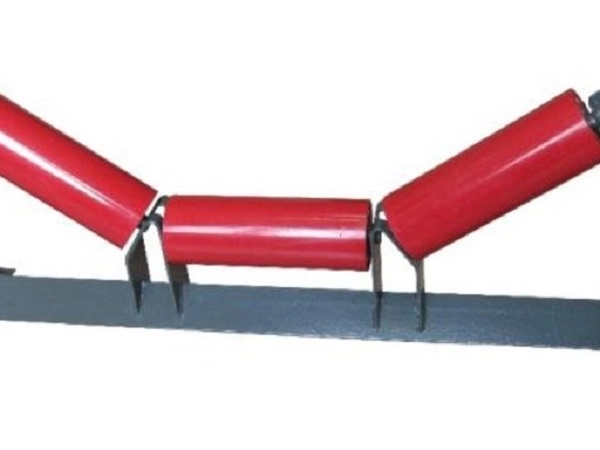
Training & Aligning Idler Types
Friction Training Aligning Idler
The friction training aligning idler uses a swing frame with side guide rollers to respond to lateral belt movement. It is primarily used on the upper carrying section of long-distance and heavy-duty conveyors where frequent belt deviation needs to be controlled.
Conical Training Aligning Idler
The conical roller uses differences in roller surface speed caused by its tapered geometry to provide a passive centering effect. It is suitable for relatively light-load conveyor systems, including grain, packaging and logistics conveying equipment.
V-Type Return Aligning Idler
The V-type return aligning idler uses two rollers arranged in a V-shaped configuration to limit lateral movement of the empty return belt. Its relatively simple structure makes it suitable for the lower return section of conventional conveying systems.
| Roller Type | Core Characteristic | Applicable Working Condition |
|---|---|---|
| Friction Training Aligning Idler | Swing frame correction with sensitive lateral response | Upper carrying section and long-distance heavy-duty conveying |
| Conical Training Aligning Idler | Passive centering through tapered roller speed difference | Light-load grain, logistics and general conveying |
| V-Type Return Aligning Idler | V-shaped structure limits return belt movement | Lower return section and dry-material conveying |
Automatic Belt Tracking Principle
Belt Deviation Detection
When the conveyor belt moves laterally from its normal running position, the belt edge contacts the vertical guide roller. The guide roller transfers the lateral force to the supporting frame.
Swing Frame Movement
The guide force causes the entire aligning idler assembly to rotate around its supporting structure. The swing angle is determined by the belt deviation and the design of the aligning mechanism.
Corrective Force Generation
Once the roller frame changes its orientation relative to the belt, a reverse guiding force is generated to help move the belt toward the centerline of the conveyor.
Belt Return to Center
As the belt moves back toward its normal position, the lateral force acting on the guide roller decreases and the aligning assembly returns toward its normal position, allowing continuous tracking correction during operation.
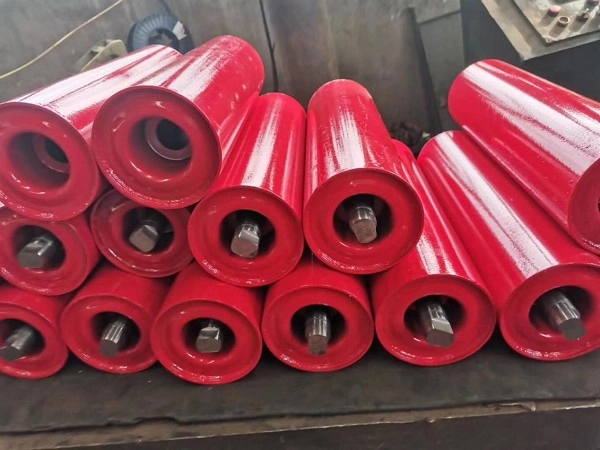
Training & Aligning Idler Configurations
Three-Roller Trough Friction Training Idler
The three-roller trough body combined with bilateral vertical guide rollers is used for upper carrying sections. It can be installed at suitable intervals on long-distance heavy-material conveyor lines to help control belt deviation.
Conical Training Idler Roller
The tapered roller configuration provides passive belt-centering through differences in peripheral speed. It is suitable for light-load applications where lower running noise and simple tracking assistance are required.
V-Type Return Training Idler
The V-type structure supports the empty return belt while limiting lateral movement. It can be used as part of the return-side belt tracking arrangement on long conveyors.
Hot-Dip Galvanized Training Idler
The roller and supporting bracket receive hot-dip galvanized treatment to improve corrosion resistance in outdoor conveying environments such as open stockyards, ports, and humid industrial areas.
HDPE Shell Training Idler
The main roller uses an HDPE shell while the guide components are selected according to the application. This construction avoids conventional steel shell corrosion and can be used in chemical plants, coastal areas and salt-fog environments.
Flame Retardant Anti-Static Training Idler
Conductive and flame-retardant guide roller materials can be configured for applicable underground coal mine conveying systems where belt tracking components must meet additional safety requirements.
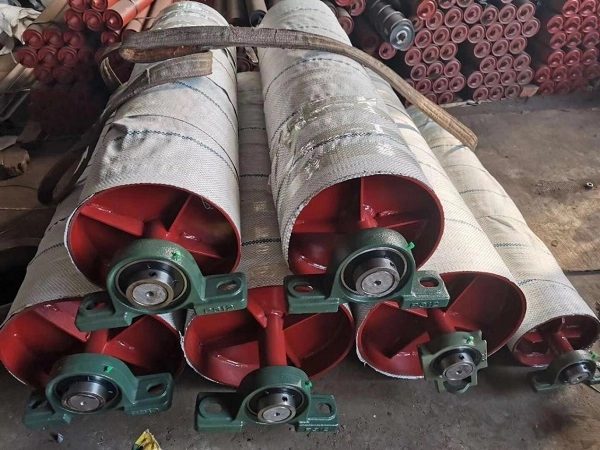
Technical Specifications
| Item | Specification |
|---|---|
| Standard Roller Diameter | 76 / 89 / 108 / 114 / 133 / 168 / 194 / 219 mm |
| Matched Belt Width | 500–2400 mm |
| Aligning Types | Friction / Conical / V-Type Return |
| Swing Angle | 15°–30° for standard friction training configuration |
| Guide Roller Height | Customizable |
| Shell Material | Q235 Carbon Steel / HDPE / 304 Stainless Steel |
| Bearing | Domestic High-Precision / SKF / FAG C3 Clearance |
| Sealing Protection | Double / Triple Composite Labyrinth Sealing |
| Surface Treatment | Electrostatic Spraying / Hot-Dip Galvanizing / PU Lagging |
| Application | Mining / Cement / Port / Chemical / Bulk Material Conveying |
Customization Options
Main Roller Shell
YUFENG can provide Q235 carbon steel, HDPE and 304 stainless steel main roller shells according to load, corrosion and environmental requirements.
Surface Treatment
Electrostatic spraying, hot-dip galvanizing and PU lagging options are available according to the required corrosion protection, wear resistance and operating environment.
Swing Mechanism
The support mechanism can be configured as a friction swing structure, conical passive centering structure or V-type return alignment structure according to the belt position and tracking requirement.
Sealing System
Double or triple composite nylon labyrinth sealing structures with rubber contact seals can be selected to reduce dust and water penetration into the bearing cavity.
Bearing Configuration
Domestic high-precision bearings or imported SKF/FAG C3-clearance bearings can be specified according to conveyor operating conditions and customer requirements.
Special Guide Roller Materials
Low-temperature, flame-retardant and anti-static guide roller materials can be configured for specialized mine and cold-region applications.
Raw Materials and Roller Construction
Main Roller Shell
Standard steel rollers use Q235 high-frequency ERW steel tube, while HDPE configurations use virgin HDPE material. Shell dimensions and wall thickness can be matched to the required conveyor load.
Roller Shaft
45# cold-drawn solid round steel is used for the shaft in standard configurations, providing resistance to bending under radial and swing loads.
Guide Roller Outer Layer
The side guide rollers can use wear-resistant natural rubber or polyurethane material to reduce direct hard contact with the conveyor belt edge during tracking correction.
Swing Bracket
The swing frame can be manufactured from Q235 thick steel plate using integrated stamping and welding processes to provide the structural support required for repeated oscillating movement.
Sealing Components
High-toughness nylon labyrinth rings and weather-resistant nitrile rubber sealing rings are used to protect the bearing area against dust and moisture.
Raw Material Inspection
Steel tubes, shafts and bearings are sampled for applicable rotation resistance, dimensional accuracy and fatigue-related properties before entering the assembly process. Unqualified materials are rejected.
Performance Indicators
| Performance Item | Standard Requirement | Test Standard |
|---|---|---|
| Rotation Resistance Coefficient | ≤0.008 | ISO 15365 |
| Dust & Water Protection Grade | IP65 | IP Test Standard |
| Rated Swing Service Life | ≥30,000 working hours | Factory Swing Fatigue Test |
| Roller Shell Concentricity | ≤0.5 mm | Dial Indicator Test |
| Guide Roller Rubber Abrasion Loss | ≤1.0 cm³/1.61 km | ISO 4649 |
| Swing Frame Free Swing Angle | 15°–30° | Factory Dedicated Test |
Actual tracking performance depends on belt width, belt tension, conveyor alignment, roller configuration, material load, installation position and operating conditions.
Applications by Conveyor Condition
Long-Distance Heavy Material Conveying
Friction training aligning idlers are suitable for long-distance conveyors transporting ore, coal, cement raw materials and other heavy bulk materials where belt tracking needs to be maintained during continuous operation.
Light-Load Material Conveying
Conical training idlers can be used for grain, packaging products and light aggregate conveying where the required belt load and tracking force are relatively moderate.
Return Belt Alignment
V-type return aligning idlers are used on the lower empty return section to help limit lateral belt movement without adding complex mechanical correction structures.
Outdoor Conveying
Galvanized configurations can be selected for open-air stockyards, ports and humid outdoor environments where atmospheric moisture can accelerate corrosion.
Corrosive Environments
HDPE shell configurations can be considered for coastal, chemical and salt-fog environments where reducing metal corrosion is an important part of conveyor component selection.
Underground Mining
Applicable flame-retardant and anti-static guide roller configurations can be used with underground coal mine conveyor systems subject to the relevant safety requirements.
Installation and Replacement
New Conveyor Frame Assembly
The training aligning idler bracket should be fixed to the conveyor frame according to the designed installation spacing. The guide roller height should then be adjusted so that the clearance between the guide roller and belt edge is approximately 5–10 mm, while the complete frame must remain capable of swinging freely.
Swing Mechanism Adjustment
After installation, the bracket fixing bolts should be tightened securely without restricting the designed swing movement. The belt should be operated under controlled conditions to verify tracking performance and allow final bracket-position adjustment if necessary.
Worn Roller Replacement
The conveyor must be stopped and isolated from its power source before maintenance. The complete aligning assembly can be removed after loosening the bracket fasteners, while the damaged main roller or guide roller can be replaced separately when the structure permits.
Long-Distance Layout
For long-distance conveyor lines over approximately 500 m, training aligning idler groups can be arranged at suitable intervals. The actual spacing should be determined according to conveyor alignment, belt behavior and operating conditions.
Matching Conveyor System Products
Conveyor Belt Series
YUFENG can supply Fabric Conveyor Belt, Steel Cord Conveyor Belt, Sidewall Conveyor Belt, Pipe Conveyor Belt, Patterned Conveyor Belt and Rough Top Conveyor Belt for different conveyor configurations.
Conveyor Roller Series
Supporting products include trough carrying idlers, impact idlers, return idlers, self-aligning roller assemblies and corresponding brackets and support stands.
Rubber Accessories
Wear-resistant rubber sheets, conveyor skirting, vulcanization repair adhesives and patch kits are available for conveyor installation, maintenance and field repair.
HDPE Pipeline Series
HDPE Water Pipe and HDPE Dredge Pipe can be supplied for auxiliary water and slurry transportation applications in mining and industrial projects.
Custom Processing
YUFENG can adjust roller diameter, guide roller height, swing angle, shaft dimensions and sealing structure according to customer working drawings and conveyor requirements.
Standards and Quality Documentation
Conveyor Standards
YUFENG Training and Aligning Idler Rollers are manufactured with reference to CEMA, GB/T10595 and ISO15365 requirements for conveyor equipment and roller performance.
Safety Requirements
Configurations intended for underground mining can be manufactured according to applicable coal mine safety requirements. The applicable certification depends on the final product configuration and intended use.
Quality Documentation
Available documentation can include ISO9001 quality management certification, CE export documentation, SGS raw material inspection reports, coal mine safety test documentation and factory swing-fatigue and service-life test reports.
Packaging and Storage
Small Diameter Aligning Idler Groups
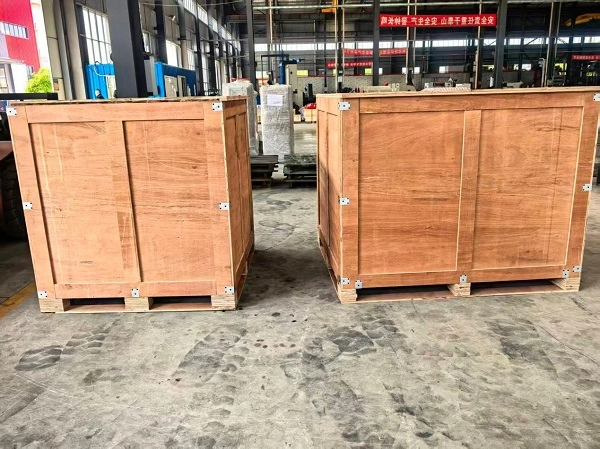
76, 89 and 108 mm aligning idler assemblies can be bundled with steel wire, fitted with protective caps on the shafts and packed in solid wooden cases for transportation.
Large Heavy Aligning Idler Frames
168, 194 and 219 mm heavy aligning idler groups can be arranged on wooden pallets and protected with plastic film to reduce bracket scratches and surface damage during shipment.
HDPE Aligning Idlers
HDPE configurations can be separated with foam or other cushioning materials to reduce surface collision and deformation during loading and unloading.
Storage Requirements
Training aligning idlers should be stored horizontally on pallets with a recommended stacking height of no more than 1.2 m. Outdoor storage should use waterproof covering and avoid prolonged exposure to rainwater and direct sunlight.
How to Select the Correct Training and Aligning Idler Roller
Conveyor Position
First determine whether the aligning idler is required for the upper carrying section or lower return section. Friction training idlers are generally used for carrying sections, while V-type structures are commonly used for return sections.
Belt Width and Roller Diameter
Provide conveyor belt width and existing frame dimensions to determine suitable roller diameter, roller length, shaft configuration and guide roller dimensions.
Conveyor Length and Load
Conveyor length, belt tension and material load affect the required tracking structure. Long-distance heavy-load systems generally require more responsive training idler configurations than short light-load conveyors.
Working Environment
Humidity, salt spray, chemical exposure, temperature and outdoor conditions should be considered when selecting carbon steel, galvanized, HDPE or stainless steel structures.
Belt Deviation Characteristics
The frequency and severity of belt deviation should be evaluated together with conveyor alignment, loading conditions and existing idler arrangement before selecting the appropriate training mechanism.
Request a Training & Aligning Idler Quotation
Required Technical Parameters
For an accurate quotation, provide the matched conveyor belt width, roller outer diameter, aligning idler type such as friction, conical or V-type return, working environment, total order quantity and target delivery port.
YUFENG technical engineers can evaluate the appropriate roller configuration, guide roller dimensions, swing structure, bearing and sealing system according to the conveyor application.
YUFENG Global Contact Information
jayce@yuphengbelt.com
WhatsApp / WeChat / Mobile
+86 15318787602
Factory Address
Xiagou Villege, ETDZ, Qingdao, Shandong, China
- View as
Self-Aligning Idler Roller
The self-aligning idler roller is an automatic belt tracking component exclusively produced by YUFENG, engineered to resolve the universal conveyor pain point of belt wandering and deviation in heavy bulk material transportation lines. As a professional heavy-duty conveyor roller manufacturer, we integrate mechanical induction pivot structure and multi-stage labyrinth sealing technology into YUFENG Self Aligning Idler Roller, delivering instant, automatic belt centering without regular manual calibration.Complete Idler Assembly
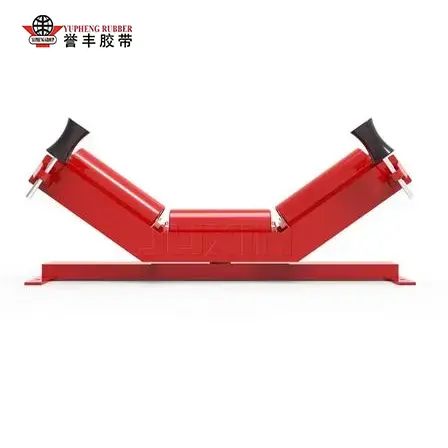
Troughing Self-Aligning Idler
Maintaining accurate belt tracking in heavy-duty conveying systems, YUFENG Troughing Self-Aligning Idler automatically corrects lateral belt movement caused by uneven loading, long-distance operation and frame deviation. Its 3-roller trough structure with pivoting guide design keeps fabric and steel cord belts centered while reducing edge wear and material spillage. Built with sealed bearings and corrosion-resistant components, it delivers reliable performance in mining, ports, cement and other harsh industrial environments.
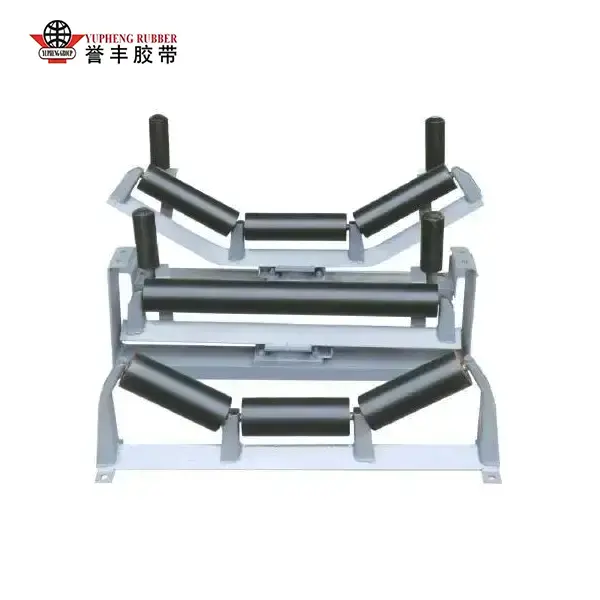
Return Self-Aligning Idler
YUFENG is a professional Return Self-Aligning Idler manufacturer and factory dedicated to delivering reliable conveyor system components for global bulk material handling industries. Engineered specifically for the return strand of belt conveyor systems, this precision-built component automatically corrects belt misalignment during continuous operation, effectively addressing common industry pain points including uneven belt wear, material spillage, belt edge damage and frequent manual adjustment demands.
YUFENG is a professional Training and Aligning Idler Roller manufacturer and supplier in China. We have an experienced sales team, professional technicians, and an after-sales service team.
News Recommendations