News

Production Process of Rubber Conveyor Belts

2026-07-16 0 Leave me a message

I. Raw Material Preparation (Customized Formulation)

Three categories of core raw materials are precisely proportioned according to operating conditions:

Rubber Raw Materials

Base rubber (Natural Rubber/NR, SBR, EPDM, NBR) + Reinforcing agents (carbon black, silica) + Vulcanization system (sulfur, accelerators) + Functional additives (antioxidants, wear-resistant agents, flame retardants, plasticizers).

Differentiated by application: Top cover rubber (wear and impact resistance), bottom cover rubber (low friction), and core/skim rubber (specifically for bonding to the carcass).

Carcass Base Materials

Fabric core: Polyester (EP), Nylon (NN), or cotton canvas; provides high-strength, multi-layer load-bearing capacity.

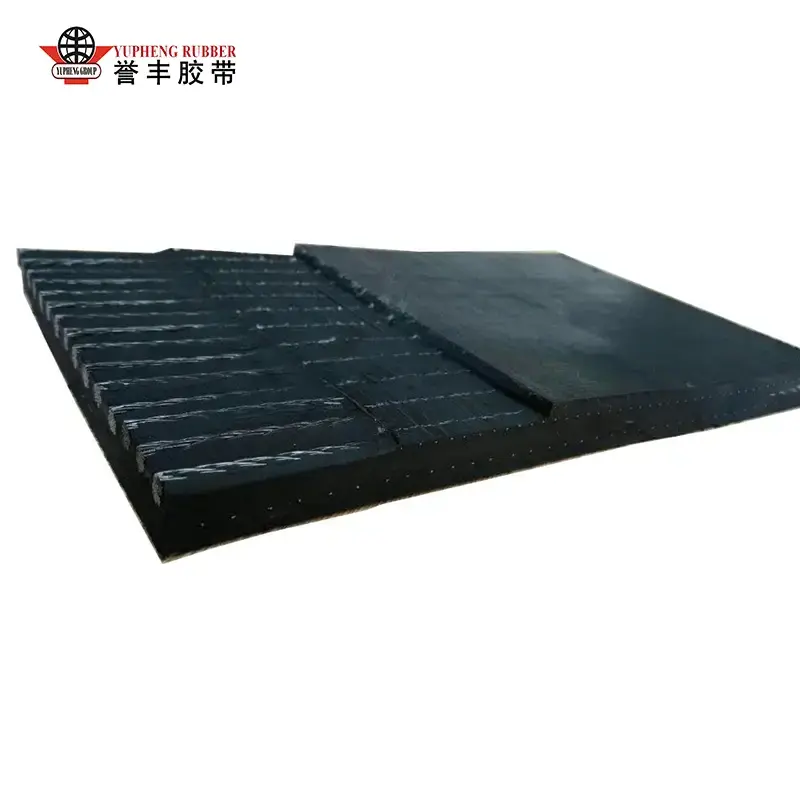
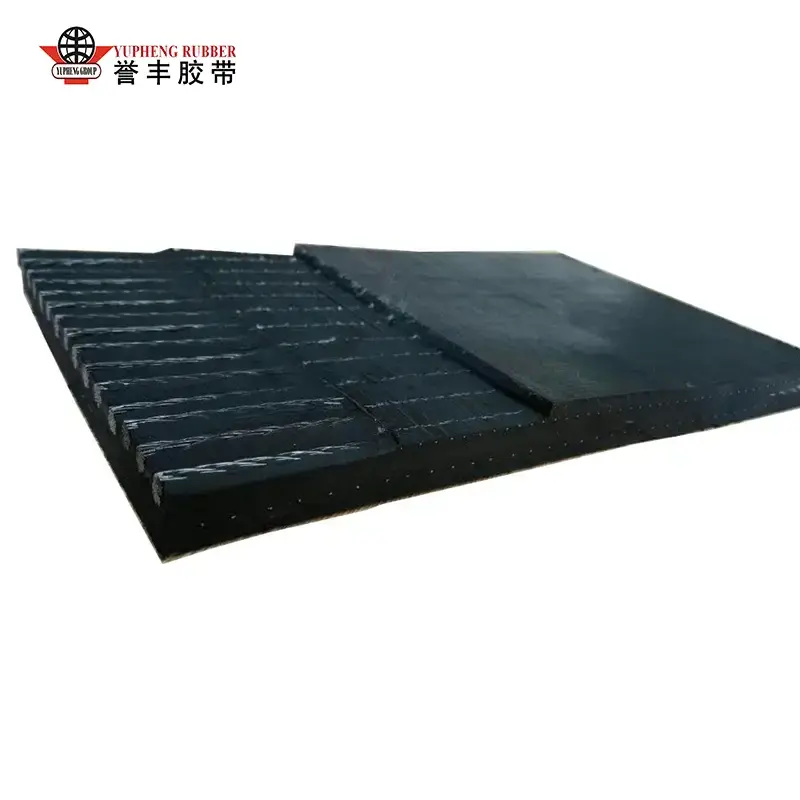
Steel cord core: Galvanized steel cords; designed for long-distance, high-tension mining applications.

Bonding Agents

RFL dip solution (Resorcinol-Formaldehyde-Latex): Prevents delamination between the rubber and the fabric or steel cords.


II. Mixing Process (Rubber compound preparation; determines fundamental properties)

Raw materials are weighed and fed into an enclosed internal mixer; mixing occurs at high temperatures (120–160°C) and high pressure for 10–15 minutes to ensure carbon black and additives are fully dispersed within the base rubber, preventing agglomeration or premature vulcanization (scorching).

The compound is discharged into an open mill for further mixing and cooling to relieve internal stresses.

A sheeting machine presses the compound into sheets of fixed thickness; these are cooled and allowed to rest/mature for 4–24 hours to stabilize plasticity.

Samples are tested for hardness, tensile strength, and adhesion strength; substandard batches are re-processed, while qualified sheets are stored by category for future use.


III. Carcass Pre-treatment (Crucial for enhancing bonding strength)

1) Fabric Canvas Pre-treatment

The canvas is flattened and dedusted, then immersed in an RFL dip tank and dried; this forms a bonding film on the surface of the canvas fibers, preventing subsequent delamination or separation. 2) Steel Cable Pre-treatment

Galvanized steel cables undergo degreasing and derusting, followed by phosphating to create a rough phosphate layer that significantly enhances penetrative adhesion with the core rubber; all cables are straightened under uniform tension in preparation for the next step.


IV. Calendering + Forming (Layered assembly to produce the green belt)

Option A: Fabric-core conveyor belt forming

Rubber coating via four-roll calender: Pre-treated canvas passes through calendering rolls at a constant speed, with a thin layer of core rubber evenly applied to both sides to produce single- or double-sided rubberized fabric;

Multi-layer assembly: Rubberized fabric layers are aligned and stacked according to the design (e.g., 3, 4, or 5 layers), with a thin coating of core rubber applied between layers to expel trapped air;

Bottom and top cover rubber layers are applied (with the top layer being wear-resistant), and edge rubber is applied to seal the sides;

Cold-pressing rolls compact the assembly to eliminate air bubbles and wrinkles, producing the unvulcanized green belt.

Option B: Steel cable-core conveyor belt forming (High-strength application)

Multiple steel cables are arranged at equal intervals and constant tension on the forming table to ensure uniform load distribution;

A bottom layer of core rubber is laid down, cables are embedded flat into the rubber, and an intermediate filler rubber layer is applied to fill the gaps between cables;

Thickened top and bottom cover rubber layers and side edge-sealing rubber are applied;

Vacuum cold-pressing consolidates the assembly, preventing air pockets or blistering between the cables and rubber.

Specialty Derivative Products

Sidewalls, cleats, and patterned rubber sheets are installed simultaneously during forming to produce integrated semi-finished anti-slip or steep-incline conveyor belts. 


V. Vulcanization (Core curing process; permanent rubber cross-linking)

Vulcanization is the critical step that transforms the "soft raw rubber blank" into a high-strength finished product. Two mainstream types of equipment are used:

Flat-bed Vulcanizing Press (Batch process; for small-to-medium widths or specialty belts)

The belt blank is placed between multi-layer heated platens. Process conditions: temperature 140–160°C, pressure 1.5–3 MPa, and vulcanization time ranging from 15 to 60 minutes depending on thickness. Under high temperature and pressure, rubber molecules cross-link, fusing the rubber layers and the reinforcement structure into a unified whole.

Continuous Drum Vulcanizer (Mass production of long-distance standard flat belts)

A steel belt continuously pulls the belt blank at a constant speed over a heated, pressurized drum for uninterrupted vulcanization. This method is suitable for long conveyor belts (kilometers in length), ensuring uniform thickness and the absence of sectional joints.

After vulcanization, the belt undergoes a slow, gradual cooling process to prevent cracking or deformation caused by thermal expansion and contraction.


VI. Post-processing and Finishing

Cooling and Setting: Air or water cooling to lower the temperature completely and relieve internal vulcanization stresses;

Edge Trimming: Removal of excess flash/burrs from both sides to standardize the belt width;

Surface Treatment: Grinding, polishing, and marking (printing model, strength rating, specifications, and production date);

Special Processing: Perforation, cutting to specific lengths, and hot-splicing of finished joints as required.


Related News
Leave me a message
X
We use cookies to offer you a better browsing experience, analyze site traffic and personalize content. By using this site, you agree to our use of cookies. Privacy Policy
RejectAccept