English
- English
- Español
- Português
- русский
- Français
- 日本語
- Deutsch
- tiếng Việt
- Italiano
- Nederlands
- ภาษาไทย
- Polski
- 한국어
- Svenska
- magyar
- Malay
- বাংলা ভাষার
- Dansk
- Suomi
- हिन्दी
- Pilipino
- Türkçe
- Gaeilge
- العربية
- Indonesia
- Norsk
- تمل
- český
- ελληνικά
- український
- Javanese
- فارسی
- தமிழ்
- తెలుగు
- नेपाली
- Burmese
- български
- ລາວ
- Latine
- Қазақша
- Euskal
- Azərbaycan
- Slovenský jazyk
- Македонски
- Lietuvos
- Eesti Keel
- Română
- Slovenski
- मराठी
- Srpski језик
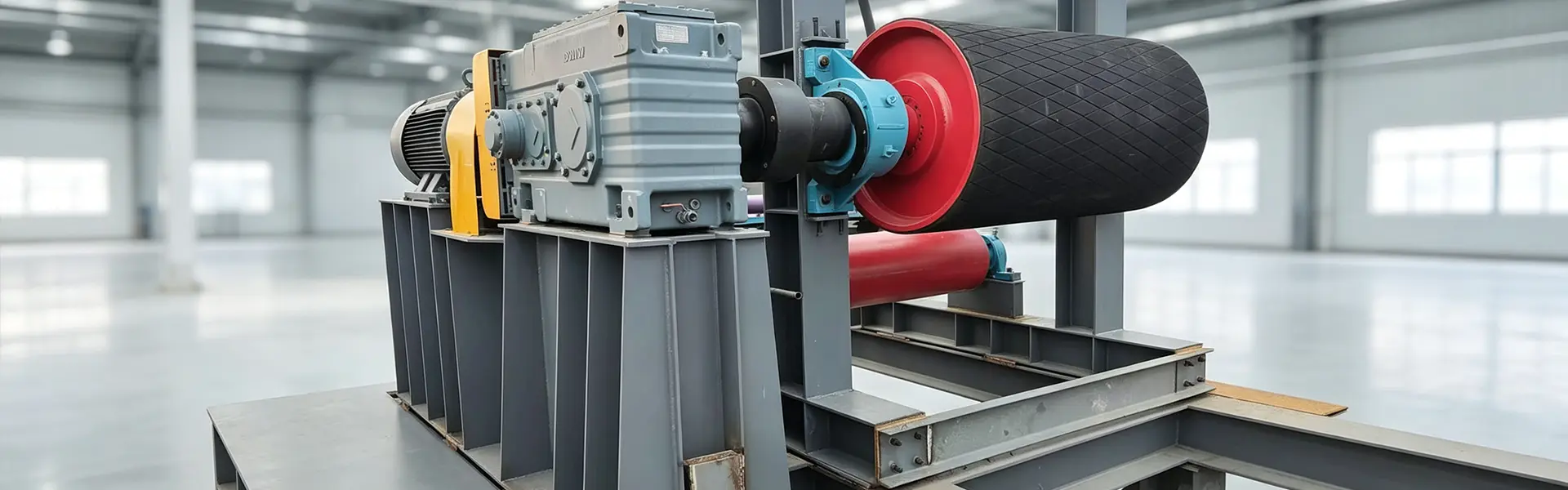
Conveyor Pulley Manufacturer for Mining and Bulk Material Handling Systems
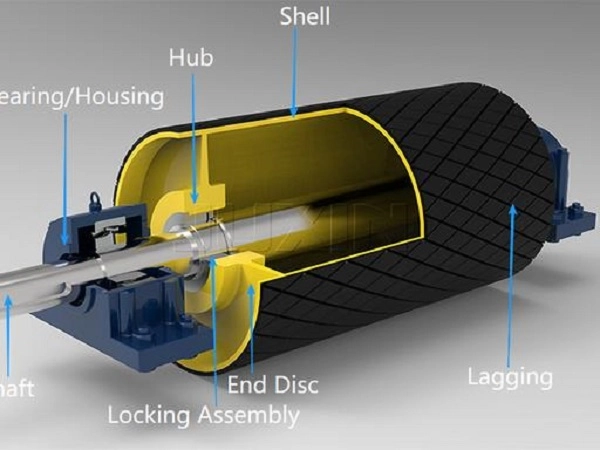
YUFENG Conveyor Pulley, also known as conveyor drum, is the main power transmission and belt-direction component used in belt conveyor systems. It is assembled from a steel shell, main shaft, end discs, hub, bearing assembly, and optional lagging layer. Different pulley structures are selected according to conveyor function, belt tension, material condition, and the required belt wrap angle.
YUFENG provides drive, tail, bend, snub, wing self-cleaning, take-up, ceramic lagged, rubber lagged and galvanized conveyor pulleys for mining, cement, ports, power plants, aggregate processing and other bulk material conveying applications. Standard pulley diameters range from Φ200 to Φ2000 mm, with belt widths from 500–2600 mm and shaft, lagging and structural dimensions customizable according to customer drawings.
Types by System Function
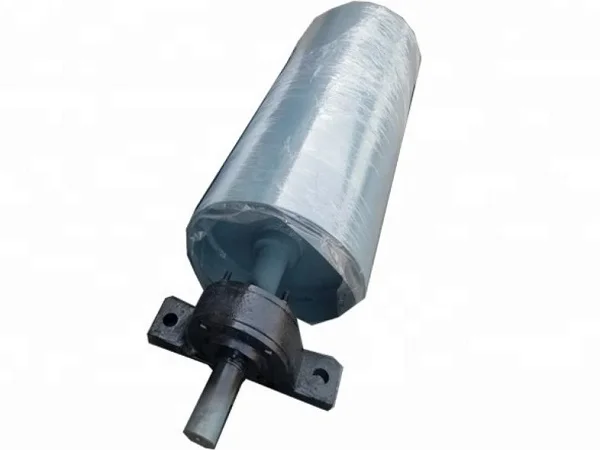
Drive Head Pulley
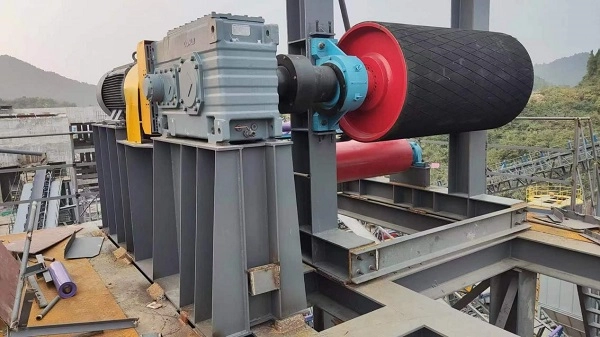
The drive pulley transfers motor torque to the conveyor belt and is normally installed at the head end of the conveyor. Rubber or ceramic lagging can be added to increase the contact friction between the pulley and belt, which is especially important for high-tension and heavy-load conveyor systems.
Tail Pulley
The tail pulley is installed at the opposite end of the conveyor and changes the belt direction as the belt enters the return section. It can be supplied with a smooth shell for relatively dry materials or a wing self-cleaning structure for applications where material accumulation around the pulley is a concern.
Bend or Snub Pulley
Bend and snub pulleys are auxiliary drums used to change the belt path and increase the belt wrap angle around the drive pulley. They can help improve power transfer and reduce belt slip in high-tension conveying systems.
Wing Self-Cleaning Pulley
The wing pulley uses an open wing structure that allows sticky carryback materials to pass through the spaces between the wings. It is suitable for wet sand, clay and other materials that may accumulate around conventional solid-shell pulleys.
Take-Up Pulley
The take-up pulley is used with a tensioning arrangement to compensate for belt elongation and maintain the required operating tension. It is suitable for long conveyors where belt tension changes during operation must be controlled.
| Pulley Type | Core Function | Applicable Working Condition |
|---|---|---|
| Drive Head Pulley | Power transmission and anti-slip belt engagement | Long-distance heavy-duty mining and port conveyors |
| Tail Pulley | Belt direction change and tail-end support | Conveyor feeding and return-end sections |
| Bend / Snub Pulley | Increases belt wrap angle around drive pulley | High-tension and complex conveyor layouts |
| Wing Self-Cleaning Pulley | Allows sticky carryback material to escape | Wet sand, clay and sticky bulk materials |
| Take-Up Pulley | Maintains belt tension and compensates for elongation | Long-distance conveyors with tensioning systems |
Structures and Surface Configurations
Rubber Lagged Drive Pulley
The rubber-lagged drive pulley uses a vulcanized rubber layer on the drum surface to improve friction between the pulley and conveyor belt. Diamond or chevron lagging patterns can be selected according to drainage, traction and operating conditions.
Smooth Tail Pulley
The smooth pulley uses a plain steel shell without a lagging layer and is suitable for applications where additional drive traction is not required. It can be used for conventional tail-end and belt return positions.
Ceramic Lagged Heavy-Duty Pulley
Ceramic lagging uses embedded wear-resistant ceramic blocks to increase surface friction and wear resistance. It can be selected for high-tension applications exposed to moisture or abrasive operating conditions.
Galvanized Anti-Corrosion Pulley
The complete pulley receives hot-dip galvanized surface treatment to improve corrosion resistance. This configuration is suitable for outdoor stockyards, coastal environments and conveying systems exposed to humid air or salt spray.
Wing Self-Cleaning Pulley
The open wing configuration reduces the amount of material trapped around the pulley surface by allowing carryback material to discharge through the gaps between the wings.
Specifications
Pulley Diameter
YUFENG provides standard drum diameters of Φ200, Φ320, Φ400, Φ500, Φ630, Φ800, Φ1000, Φ1250, Φ1600 and Φ2000 mm. Final pulley diameter should be selected according to belt construction, belt tension, pulley position and conveyor design.
Matched Conveyor Belt Width
The pulley range can be matched with conveyor belt widths from approximately 500–2600 mm. Shaft length, shell width and hub dimensions can be adjusted according to the conveyor frame and belt arrangement.
Shaft Configuration
The main shaft can be customized according to maximum belt tension, pulley diameter, bearing arrangement and conveyor load. Shaft dimensions should be confirmed through the conveyor design or customer engineering drawings.
Lagging Thickness and Material
Rubber, ceramic and other lagging configurations can be selected according to required friction, wear resistance, drainage and operating environment.
Bearing Housing
Split bearing housings made from cast iron or steel plate can be configured according to installation requirements. Sealing structures are designed to reduce the entry of dust and moisture into the bearing assembly.
Design and Manufacturing
Pulley Shell
The standard shell uses Q235B or Q345 thick steel tube selected according to pulley diameter and required structural strength. Stainless steel construction can also be discussed for specialized corrosion-resistant applications.
End Disc and Hub
Thick steel plate is used for the end discs and hubs. These components are joined to the pulley shell to create the structural assembly that transfers belt and shaft loads through the drum.
Main Shaft
YUFENG uses 45# solid quenched and cold-drawn round steel for the standard shaft configuration. The shaft is dimensioned according to radial load, belt tension and bearing arrangement.
Welding Process
Robot full-penetration welding is used for the shell and end-disc assembly, followed by stress-relief treatment where specified. The welding structure is designed to maintain dimensional stability under continuous belt tension.
Lagging Process
Rubber and ceramic lagging can be integrated with the pulley surface according to the selected construction. Proper bonding between the lagging and shell helps reduce peeling during repeated high-speed operation.
Bearing Sealing
The bearing assembly can use multi-stage labyrinth sealing with grease filling to reduce coal dust, slurry and moisture entering the bearing area.
Performance Indicators
| Performance Item | Standard Requirement | Test Standard |
|---|---|---|
| Pulley Concentricity | ≤0.8 mm | Dial Indicator Test |
| Lagging Peel Strength | ≥10 N/mm | ISO 2411 |
| Bearing Dust & Water Protection | IP65 | IP Test Standard |
| Rated Load Service Life | ≥30,000 working hours | Factory Accelerated Aging Test |
| Welding Impact Resistance | No crack after 1000 fatigue cycles | Welding Test Standard |
| Shaft Bending Deformation | ≤1/1000 span under rated load | Static Pressure Test |
Actual pulley performance depends on drum diameter, shaft dimensions, belt tension, lagging configuration, bearing selection, conveyor speed, and operating environment.
Lagging and Traction Selection
Diamond Rubber Lagging
Diamond-pattern rubber lagging increases the contact area and friction between the drive pulley and conveyor belt. It is suitable for general heavy-duty drive applications where increased traction is required.
Chevron Rubber Lagging
Chevron-pattern rubber lagging provides directional grooves that can improve water and material drainage from the pulley surface while maintaining belt traction in suitable operating environments.
Ceramic Lagging
Ceramic blocks provide a harder and more wear-resistant contact surface than conventional rubber lagging. This configuration can be considered for high-tension, high-abrasion or wet applications where long-term surface performance is important.
Smooth Surface
A plain steel surface can be used on tail and auxiliary pulleys where high drive friction is not required. It provides a simple structural configuration for conventional conveyor layouts.
Customization Options
Shell Material
Q235B and Q345 thick-wall steel tubes are available for standard industrial pulley construction, while stainless steel options can be considered for specialized environments requiring additional corrosion resistance.
Lagging Material
YUFENG can provide smooth, diamond rubber, chevron rubber, ceramic and other selected lagging structures according to belt traction, water drainage and wear requirements.
Welding Structure
The shell, end discs, hubs and other structural components can be manufactured according to the required pulley dimensions and load conditions, with full-penetration welding available for applicable heavy-duty designs.
Bearing Housing
Cast iron or steel plate split bearing housings can be selected according to the pulley installation and maintenance requirements.
Special Environmental Configuration
Special pulley constructions can be considered for underground mining, low-temperature operation, high-corrosion environments and other project-specific operating conditions.
Matching Accessories
YUFENG can also supply tension trolleys, pulley bearing seats, locking hubs and related mounting components for complete pulley installation.
Raw Materials and Quality Control
Pulley Shell Material
YUFENG selects Q235B or Q345 thick steel tube for standard heavy-duty pulley shells and avoids thin-walled unsuitable recycled steel tubes for the specified industrial configurations.
Main Shaft Material
45# solid quenched steel is used for the standard pulley shaft, with dimensions selected according to maximum belt tension and calculated shaft load.
End Disc and Hub Material
Thick steel plate is used for end discs and hubs to provide the structural connection between the shell and shaft assembly.
Lagging Material
Virgin wear-resistant natural rubber and selected ceramic blocks are available for pulley lagging according to the required traction and wear resistance.
Bearing Assembly
Heavy-duty spherical roller bearings with suitable clearance can be selected for the pulley bearing assembly, together with multi-stage dust and water sealing.
Incoming Material Testing
Steel tubes, shafts and lagging materials are sampled for applicable tensile, welding fatigue, dimensional and bonding-related properties before entering the production process.
Installation and Replacement
New Conveyor Installation
The pulley is positioned at the designated drive, tail, bend or take-up location, and the shaft is aligned with the bearing seat mounting holes. The bearing housings are then secured, grease is added where required, and the belt tensioning system is adjusted before commissioning.
Belt Tension Adjustment
After installation, the required operating tension is adjusted through the take-up trolley or tail tensioning device according to the conveyor design. Correct tension is important for drive traction and belt tracking.
Empty Running Test
The conveyor should be operated without material first to check pulley rotation, vibration, belt tracking and abnormal noise. Any abnormal condition should be corrected before loaded operation.
Worn Pulley Replacement
The conveyor must be stopped, isolated from the power supply and fully de-tensioned before pulley replacement. The bearing housing can then be dismantled and the old pulley removed using suitable lifting equipment.
Application by Position
Head Drive Position
Drive pulleys are used at the power transmission end of the conveyor. Rubber or ceramic lagging can be selected according to belt tension, material load and required traction.
Tail Feeding Position
Tail pulleys reverse the belt direction at the feeding end. Smooth or wing self-cleaning structures can be selected according to material moisture and carryback conditions.
Bend and Snub Positions
Bend and snub pulleys are used where the belt path changes or where the drive pulley requires additional wrap angle. Their dimensions should be matched to belt tension and the overall conveyor geometry.
Take-Up Position
Take-up pulleys work with tensioning systems to compensate for belt elongation and maintain required belt tension on long-distance conveyors.
Wet and Sticky Material Applications
Wing self-cleaning pulleys are suitable where wet clay, sand or other carryback materials may accumulate around the pulley surface and interfere with belt movement.
Standards and Quality Documentation
Conveyor Pulley Standards
YUFENG conveyor pulleys are manufactured with reference to applicable CEMA conveyor pulley requirements, GB/T10595 and ISO15364 performance requirements.
Safety Requirements
Pulleys intended for underground mining systems can be configured according to applicable coal mine safety requirements. The specific documentation depends on the final pulley configuration and application.
Export Documentation
Available documentation can include ISO9001 quality management certification, CE export documentation, SGS raw material inspection reports, coal mine safety test documents, and factory welding fatigue and service-life test reports.
Matching Conveyor System Products
Conveyor Belt Series
YUFENG can supply Fabric Conveyor Belt, Steel Cord Conveyor Belt, Sidewall Conveyor Belt, Pipe Conveyor Belt, Patterned Conveyor Belt and Rough Top Conveyor Belt for complete material conveying systems.
Conveyor Roller Range
Supporting products include carrying idlers, impact idlers, training and aligning idlers, return idlers and related roller brackets.
Pulley Supporting Components
Bearing seats, locking hubs, take-up trolleys and pulley lagging materials can be supplied for pulley installation and maintenance.
Auxiliary Rubber Products
Wear-resistant rubber sheets, conveyor skirting and vulcanization repair adhesives can be supplied for supporting conveyor maintenance requirements.
HDPE Pipeline Series
HDPE Water Pipe and HDPE Dredge Pipe can be supplied for auxiliary water and slurry transportation applications in mining and industrial projects.
Custom Processing
Pulley diameter, shaft dimensions, shell thickness, lagging material, bearing configuration and load capacity can be customized according to customer working drawings.
Packaging and Storage
Medium and Small Diameter Pulleys
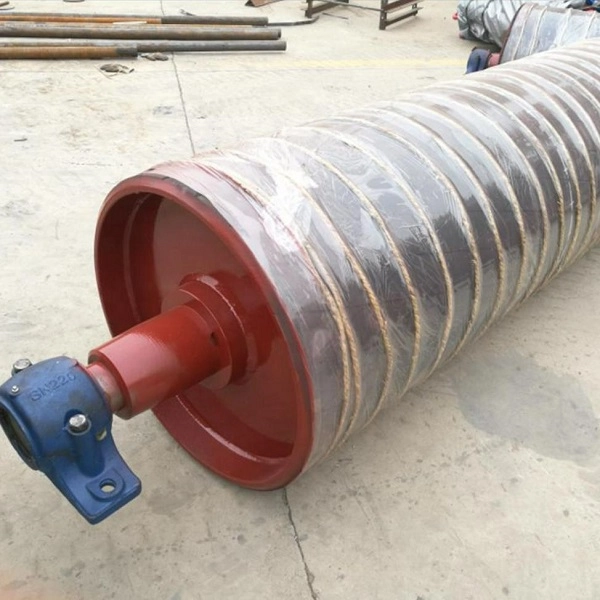
Pulleys from approximately Φ200–Φ630 mm can have shaft ends protected with plastic caps, wrapped with waterproof film and packed in solid wooden cases.
Large Heavy Pulleys
Pulleys from approximately Φ800–Φ2000 mm can be fixed with steel frames on wooden pallets and covered with protective tarpaulin to reduce movement and lagging damage during transportation.
Ceramic Lagged Pulleys
Ceramic lagging surfaces can be protected with separate foam or cushioning materials to reduce the risk of ceramic block damage during handling.
Storage Requirements
Conveyor pulleys should be stored horizontally on suitable supports with a recommended stacking height of no more than 1.2 m. Waterproof covering should be used for outdoor storage, and prolonged exposure to rainwater should be avoided.
How to Select the Correct Conveyor Pulley
Pulley Position
First determine whether the pulley is required as a drive, tail, bend, snub, wing or take-up pulley because each structure performs a different function within the conveyor.
Belt Width and Diameter
Provide the conveyor belt width, required pulley diameter and existing frame dimensions to determine suitable shell width, shaft dimensions and bearing configuration.
Maximum Belt Tension
Maximum operating belt tension is essential for shaft, shell, end-disc and hub sizing. Heavy-duty pulley construction should be selected according to the calculated tension rather than diameter alone.
Surface and Material Conditions
Material moisture, abrasiveness, carryback, salt spray, chemical exposure and required traction determine whether a smooth, rubber-lagged, ceramic-lagged, galvanized or wing pulley is appropriate.
Conveyor Layout
Complex conveyor geometries may require combinations of drive, snub, bend and take-up pulleys. The complete pulley arrangement should be evaluated together with belt, idler and tensioning system requirements.
Request a Conveyor Pulley Quotation
Required Technical Parameters
For an accurate quotation, provide the matched conveyor belt width, pulley diameter, pulley type, lagging material, maximum belt tension, working environment, total order quantity and target delivery port.
YUFENG technical engineers can evaluate the pulley shell, shaft, end-disc structure, bearing arrangement, lagging type and supporting accessories according to the complete conveyor design.
YUFENG Global Contact Information
jayce@yuphengbelt.com
WhatsApp / WeChat / Mobile
+86 15318787602
Factory Address
Xiagou Villege, ETDZ, Qingdao, Shandong, China
- View as
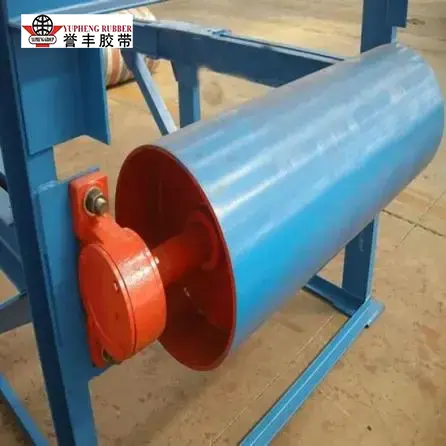
Drive Pulley
Transferring motor torque into reliable belt traction, YUFENG Drive Pulley is engineered for heavy-duty conveyor systems in mining, ports, metallurgy and cement industries. Its thickened carbon steel shell, tempered 45 steel shaft and optional rubber lagging provide high load capacity, wear resistance and stable grip across demanding operating conditions from -30°C to 85°C.
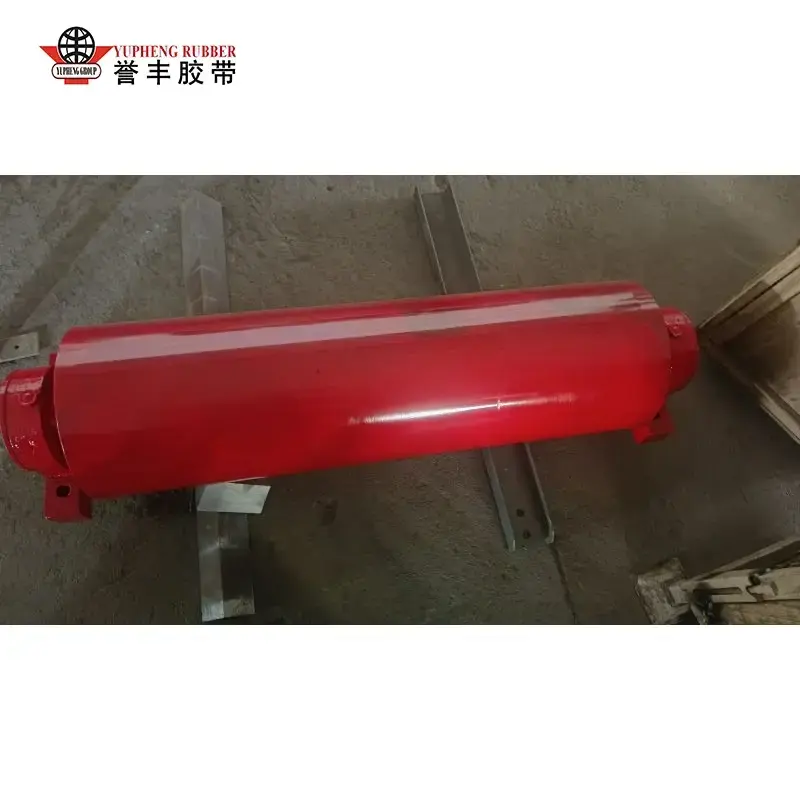
Tail Pulley
At the conveyor return end, YUFENG Tail Pulley provides reliable belt reversing and support for heavy-duty bulk conveying systems. Its robotic-welded structure, forged C45 steel shaft and dual-labyrinth spherical roller bearings deliver strong load capacity and durability, helping prevent shaft deformation, bearing failure and uneven belt wear. Suitable for mining, quarrying, ports, metallurgy and cement applications, with standard and customized dimensions available.
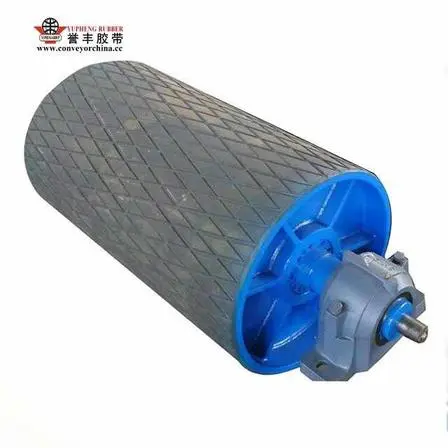
Rubber Lagged Drive Pulley
Providing stable power transmission for heavy-duty belt conveyors, YUFENG Rubber Lagged Drive Pulley combines a Q345 high-strength steel shell with hot-vulcanized rubber lagging to enhance friction and wear resistance. Designed for mining, ports, metallurgy, cement and bulk handling systems, it helps reduce belt slippage, shell abrasion and power transmission instability while supporting standard and customized pulley solutions.
YUFENG is a professional Conveyor Pulley manufacturer and supplier in China. We have an experienced sales team, professional technicians, and an after-sales service team.
News Recommendations