English
- English
- Español
- Português
- русский
- Français
- 日本語
- Deutsch
- tiếng Việt
- Italiano
- Nederlands
- ภาษาไทย
- Polski
- 한국어
- Svenska
- magyar
- Malay
- বাংলা ভাষার
- Dansk
- Suomi
- हिन्दी
- Pilipino
- Türkçe
- Gaeilge
- العربية
- Indonesia
- Norsk
- تمل
- český
- ελληνικά
- український
- Javanese
- فارسی
- தமிழ்
- తెలుగు
- नेपाली
- Burmese
- български
- ລາວ
- Latine
- Қазақша
- Euskal
- Azərbaycan
- Slovenský jazyk
- Македонски
- Lietuvos
- Eesti Keel
- Română
- Slovenski
- मराठी
- Srpski језик
Why Are Steel Cord Conveyor Belts Ideal for Long-Distance Conveying?
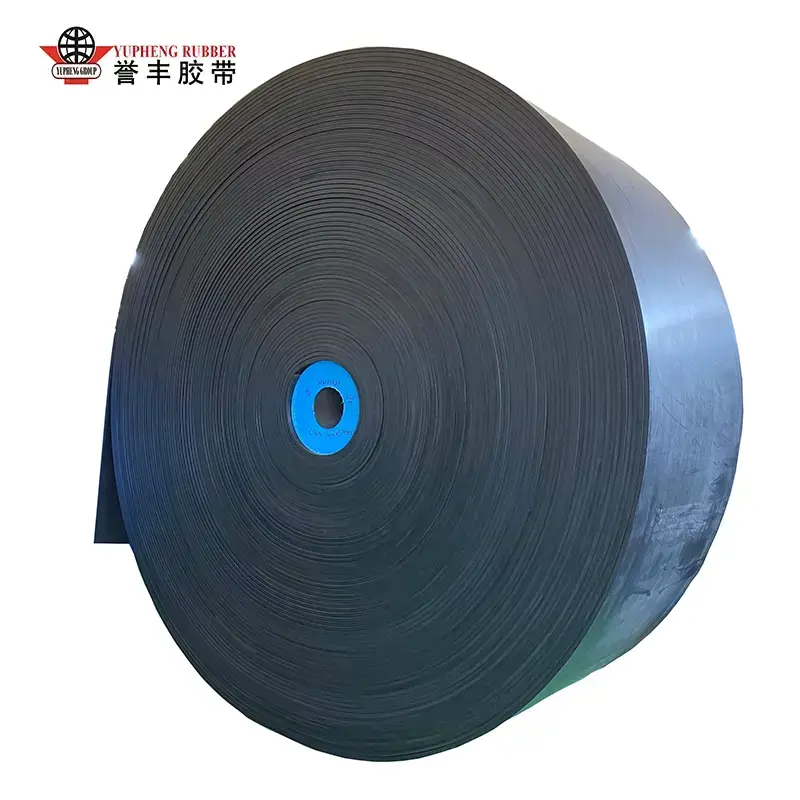
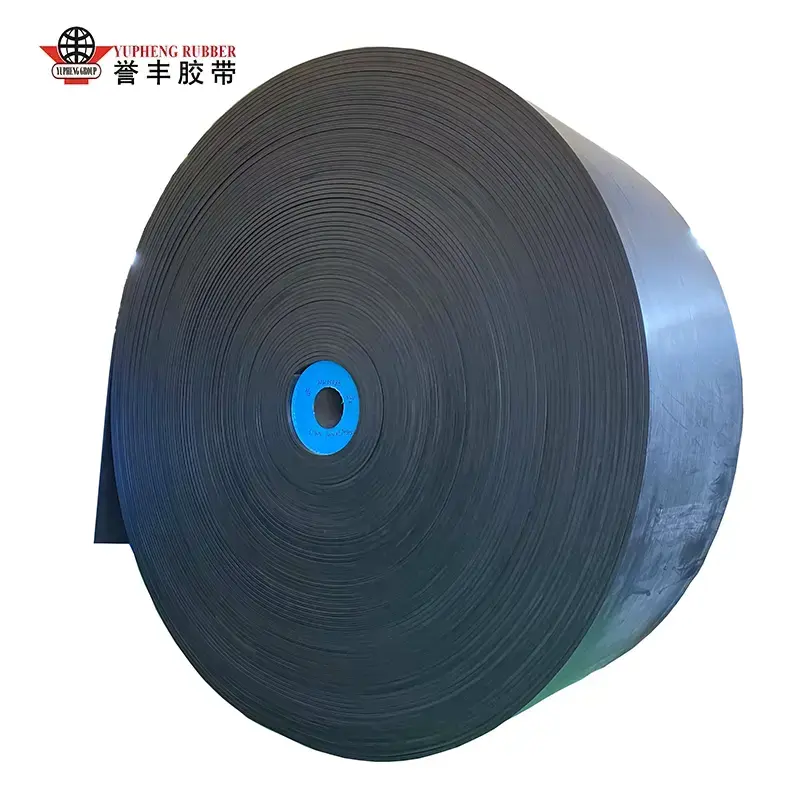
Steel cord conveyor belts are widely used in long-distance material handling because of their high tensile strength, low elongation, and stable performance under continuous heavy loads. In mining, ports, cement plants, and other industrial facilities, these belts help maintain consistent conveying capacity while reducing belt stretching, unexpected downtime, and maintenance frequency. In this article, we explain how steel cord reinforcement, rubber cover materials, belt specifications, and production quality affect long-distance conveying performance, drawing on YUFENG's manufacturing experience and General Steel Cord Conveyor Belt applications.
Table of Contents
- What Challenges Does Long-Distance Conveying Present?
- How Does Steel Cord Reinforcement Improve Belt Performance?
- Why Is Low Elongation Important for Long Conveyor Systems?
- How Do Rubber Covers and Steel Cords Handle Heavy Loads?
- What Specifications Should Be Considered?
- Where Are Steel Cord Conveyor Belts Used?
- How Do We Ensure Consistent Product Quality?
- Frequently Asked Questions
1. What Challenges Does Long-Distance Conveying Present?
In a long conveyor system, belt performance affects much more than material transportation. It also influences equipment stability, maintenance schedules, energy consumption, and the continuity of the entire production line.
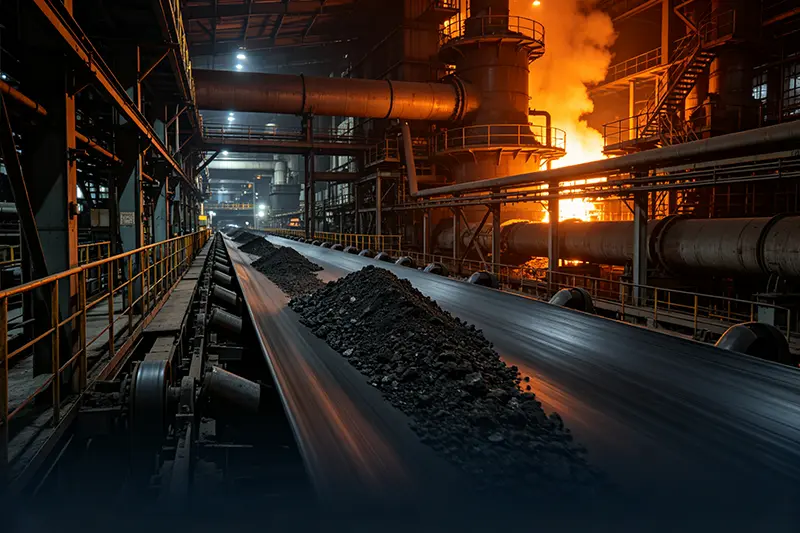
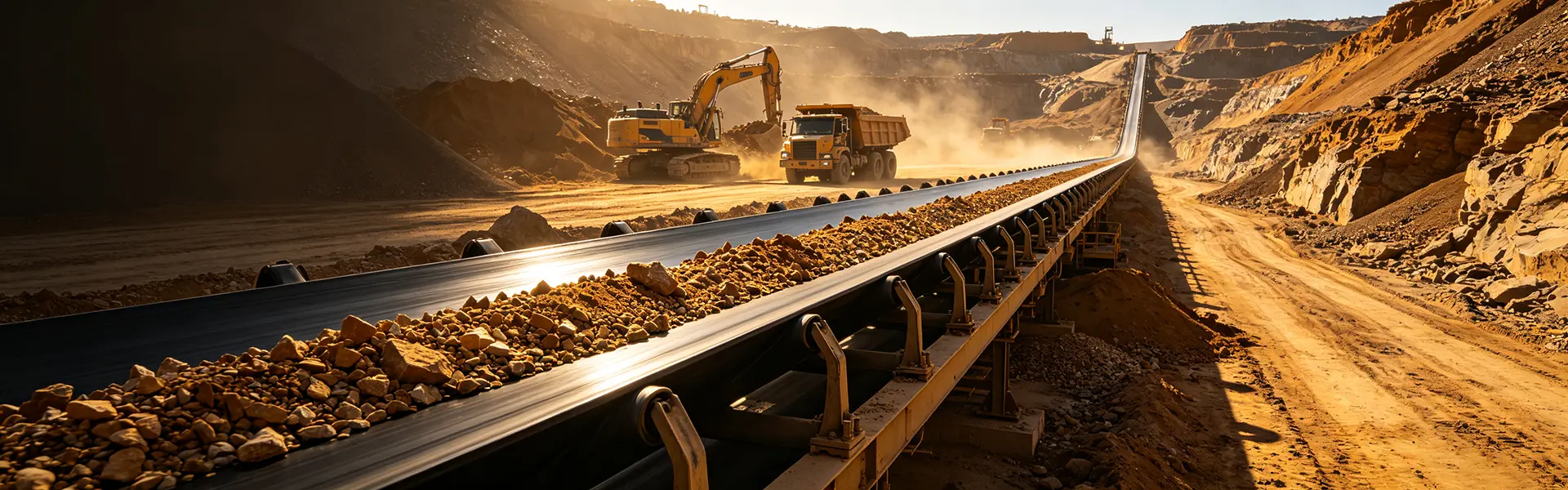
When a conveyor belt operates over several hundred meters or longer, it must withstand continuous tensile forces, material impact, friction, and repeated loading and unloading. These conditions become more demanding in open-pit mines, port terminals, and large industrial plants where coal, iron ore, limestone, and other bulk materials are transported every day.
From our manufacturing experience at YUFENG, we find that three problems deserve particular attention:
- Excessive belt elongation: Repeated tensile loading can cause belt stretching, requiring more frequent tension adjustments and potentially affecting conveyor alignment.
- Impact and tearing: Large pieces of ore, coal, or gravel can create concentrated impact forces at loading points, increasing the risk of belt damage.
- Unplanned maintenance: Belt damage, rubber separation, and other structural problems can interrupt continuous production and increase replacement costs.
These challenges explain why conventional multi-layer fabric belts are not always the most suitable option for long-distance, heavy-duty conveying. For these operating conditions, a General Steel Cord Conveyor Belt provides a stronger longitudinal tensile structure and better dimensional stability.
2. How Does Steel Cord Reinforcement Improve Belt Performance?
The main difference between a steel cord conveyor belt and a fabric conveyor belt is the internal reinforcement structure.
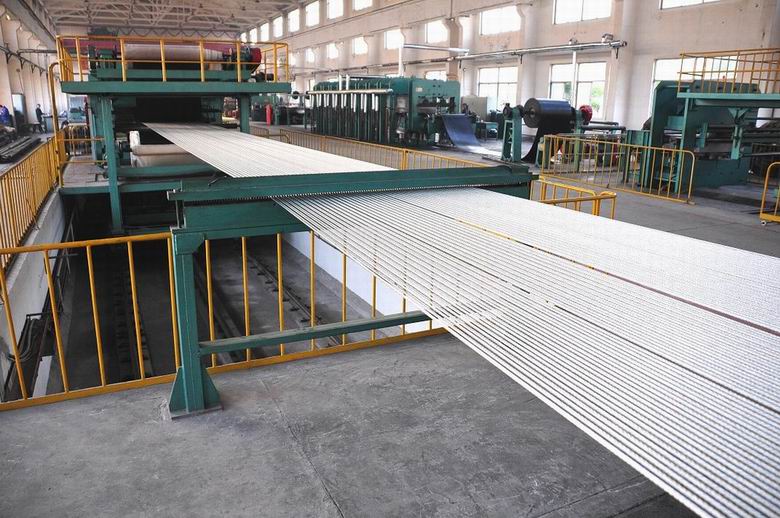
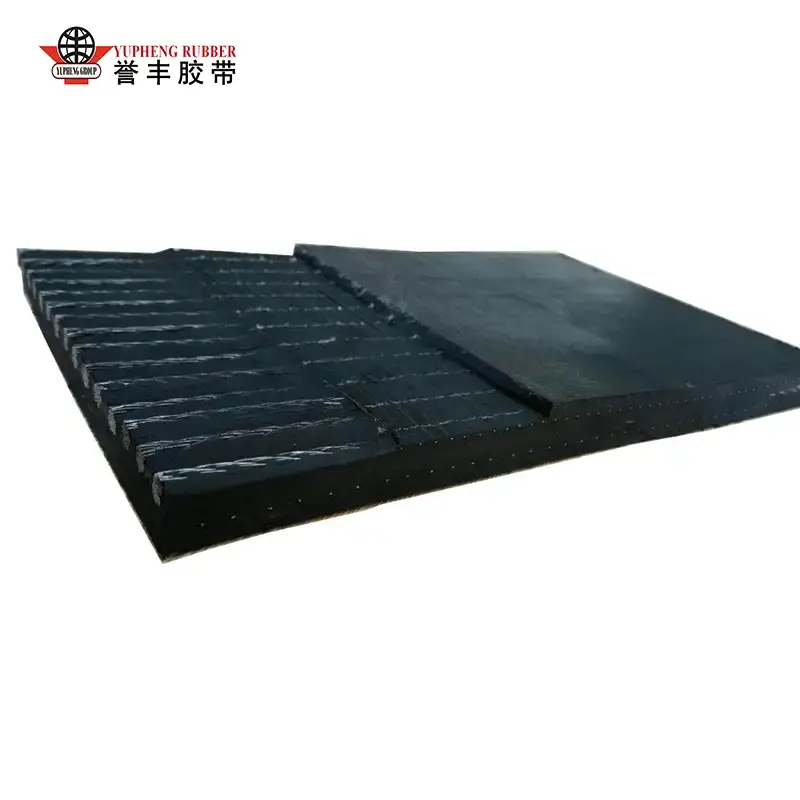
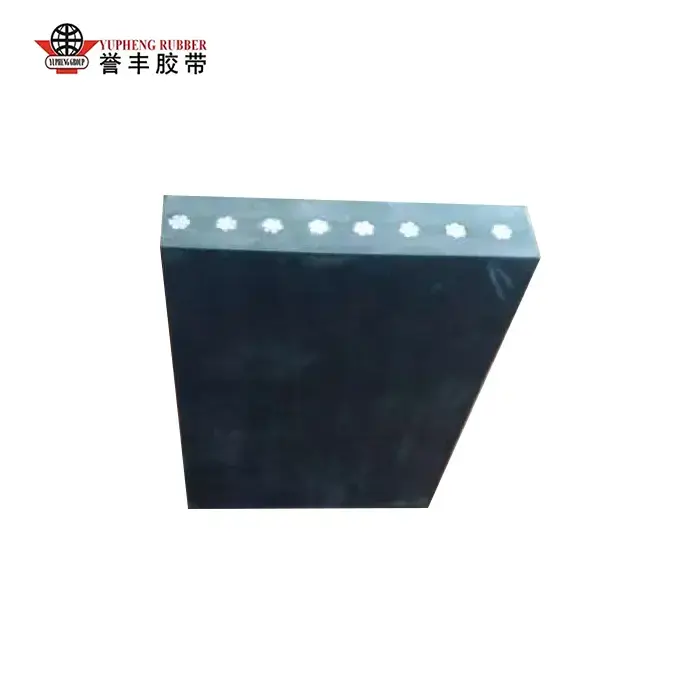
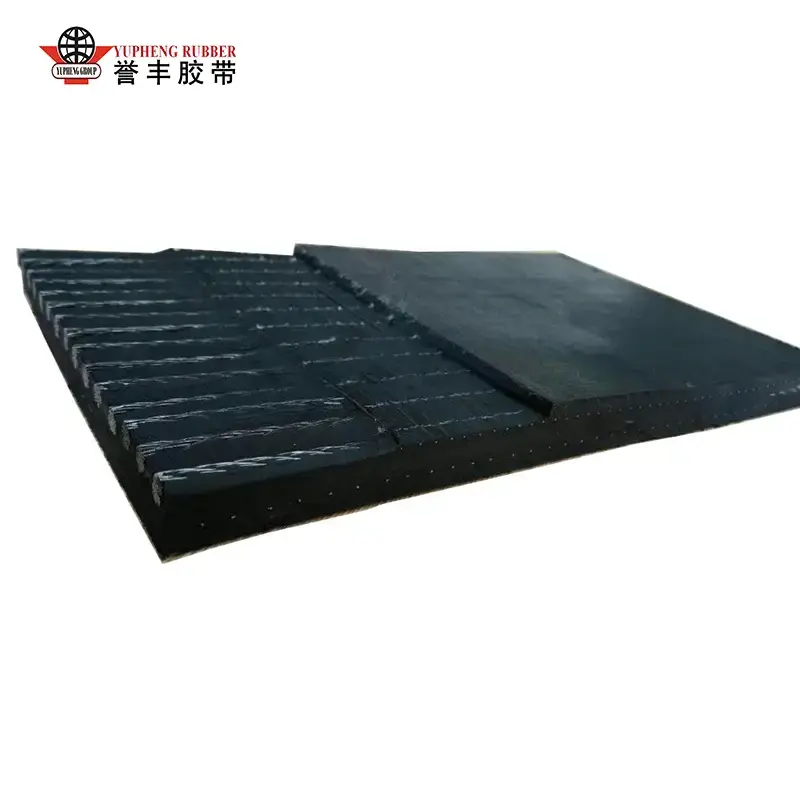
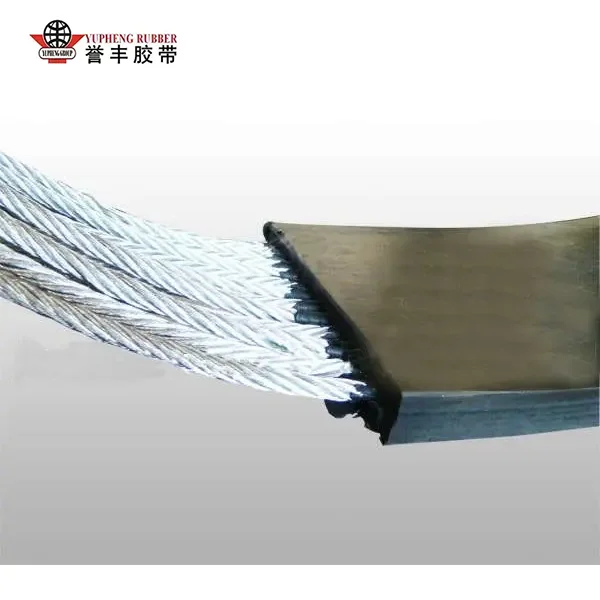
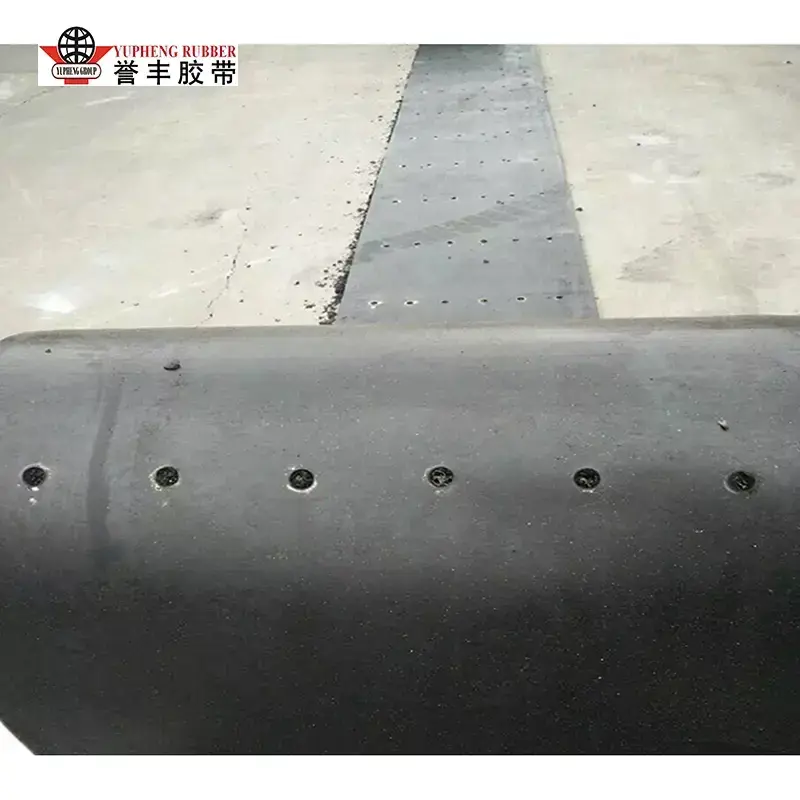
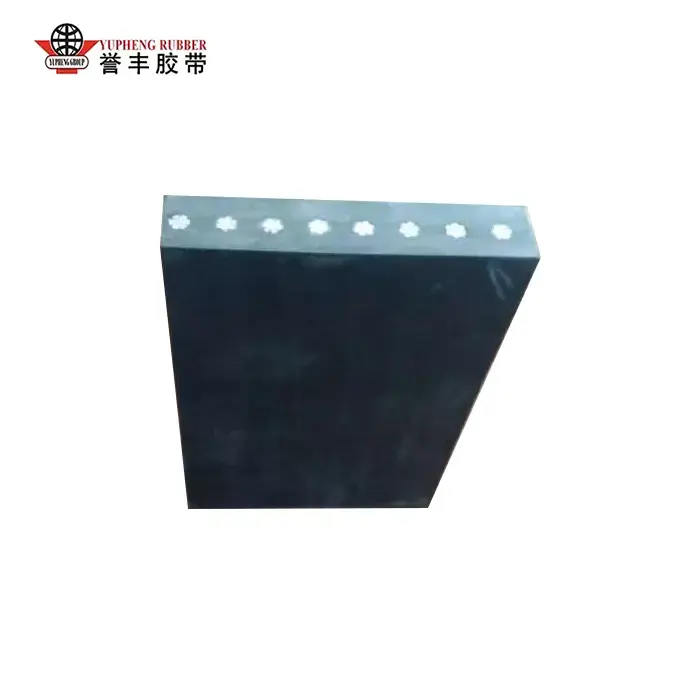
Fabric conveyor belts use textile layers to provide tensile strength. A steel cord conveyor belt, on the other hand, uses multiple high-strength longitudinal galvanized steel cords as its main load-bearing structure. These cords are arranged evenly inside the rubber body and bonded through an integrated vulcanization process.
At YUFENG, we use high-toughness galvanized steel cords with controlled spacing and tension. This construction provides several practical advantages for long-distance conveying:
- High tensile strength: Steel cords support demanding pulling forces in heavy-duty conveyor systems.
- Low elongation: The reinforced structure helps maintain a more stable belt length during continuous operation.
- Improved structural integrity: Integrated vulcanization helps bond the steel cords and rubber layers into a unified belt structure.
- Better resistance to impact and tearing: The reinforcement distributes tensile forces and helps the belt withstand demanding loading conditions.
For a fixed conveyor line transporting ore or coal over a long distance, these characteristics are particularly important. Stable belt dimensions help maintain proper tracking and reduce the need for frequent tension corrections.
Our conveyor belt product range also includes fabric core, tubular, sidewall, heat-resistant, and other specialized rubber conveyor belts for different conveying conditions.
3. Why Is Low Elongation Important for Long Conveyor Systems?
Low elongation is one of the most important reasons industrial operators choose steel cord reinforcement for long-distance conveying.
As a conveyor belt operates under continuous tension, its length can gradually change. Excessive elongation may affect belt tension, take-up travel, tracking stability, and the overall operation of the conveying system.
Our General Steel Cord Conveyor Belt has a specified permanent elongation of ≤0.2% under rated load. This low elongation helps maintain more consistent belt dimensions during long-term operation.
In practical terms, a more stable belt length can help:
- Reduce the frequency of belt tension adjustments.
- Maintain more consistent alignment along long conveyor routes.
- Support continuous transportation under heavy operating loads.
- Reduce maintenance interruptions caused by excessive belt stretching.
However, belt elongation is not the only factor determining system performance. Conveyor length, installation tension, pulley diameter, loading conditions, and take-up design must also be considered when selecting the belt.
4. How Do Rubber Covers and Steel Cords Handle Heavy Loads?
Steel cord reinforcement provides tensile strength, but the rubber cover plays an equally important role in protecting the belt during transportation.
At YUFENG, we use screened natural rubber and synthetic rubber blended compounds for the upper and lower covers. The formulation is designed to provide abrasion resistance, aging resistance, and flexibility under normal operating conditions.
Each part of the belt serves a different purpose:
| Structural Component | Main Function | Operational Benefit |
|---|---|---|
| Upper Rubber Cover | Protects the belt surface from material abrasion and impact. | Helps reduce surface wear during bulk material transportation. |
| Galvanized Steel Cords | Provide longitudinal tensile reinforcement. | Support heavy loads and reduce permanent elongation. |
| Lower Rubber Cover | Protects the belt underside during contact with rollers and pulleys. | Helps maintain belt integrity during continuous operation. |
| Integrated Vulcanized Structure | Combines rubber and steel cord reinforcement into one belt body. | Improves bonding and overall structural stability. |
Another important consideration is the bonding between steel cords and rubber. Poor adhesion can lead to separation, cord exposure, and premature belt failure. This is why we pay attention to raw material selection, cord arrangement, and vulcanization quality throughout production.
5. What Specifications Should Be Considered for Long-Distance Conveying?
Choosing a steel cord conveyor belt should start with the actual operating conditions rather than simply selecting the highest tensile strength grade.
At YUFENG, we provide different tensile strength grades and belt widths to match varying conveyor capacities, transportation distances, and industrial requirements.
General Steel Cord Conveyor Belt Technical Parameters
| Parameter | Available Specifications |
|---|---|
| Product Name | General Steel Cord Conveyor Belt |
| Tensile Strength Grades | ST630, ST800, ST1000, ST1250, ST1600, ST2000, ST2500, ST3150, ST5000 |
| Belt Width | 500 mm, 650 mm, 800 mm, 1000 mm, 1200 mm, 1400 mm, 1600 mm, 1800 mm, 2000 mm; customized widths available |
| Working Temperature | -30°C to 100°C for standard normal-temperature type |
| Permanent Elongation | ≤0.2% under rated load |
| Reinforcement | High-strength galvanized steel cords |
| Rubber Cover Material | Natural rubber and synthetic rubber blended compound |
| Applicable Materials | Coal, ore, limestone, gravel, mineral powder, and chemical bulk materials |
| Production Standards | GB/T, ISO, and applicable international conveyor belt standards |
| Warranty | 12 months under standard working conditions and normal maintenance |
How Should You Select the Right Tensile Strength Grade?
The ST grade represents the nominal tensile strength of the steel cord conveyor belt in N/mm. A higher grade provides greater nominal tensile strength, but it should not automatically be considered the best choice for every project.
When evaluating the required grade, we recommend considering:
- Total conveyor length and elevation changes.
- Material density and maximum transportation capacity.
- Starting, stopping, and operating tension.
- Loading-point impact and operating frequency.
- Pulley diameter and conveyor system design.
For example, a conveyor transporting iron ore over a long route may require a different tensile strength grade from a shorter line handling limestone. The final selection should be based on engineering calculations and actual operating conditions.
6. Where Are Steel Cord Conveyor Belts Used in Long-Distance Transportation?
Steel cord conveyor belts are commonly selected for industrial transportation systems where continuous operation, high tensile strength, and stable belt performance are important.
Mining and Open-Pit Coal Operations
Mining operations often involve long transportation routes, heavy material loads, and dusty or humid working environments. Our steel cord conveyor belts are suitable for transporting coal, iron ore, and other extracted materials along fixed conveying lines.
In one Southeast Asian open-pit coal mine project, YUFENG supplied General Steel Cord Conveyor Belt products for a medium-to-long-distance conveying system. The belt operated under frequent heavy loading, dust, and humid conditions. According to the project feedback, the belt maintained good operating condition after years of service, without obvious degumming, cracking, or steel cord damage.
Port Terminals and Bulk Cargo Handling
Ports need reliable conveyor systems to handle frequent loading and unloading of bulk materials. Coal, ore, and gravel transportation requires belts that can withstand repeated material impact while maintaining stable conveying performance.
Our steel cord conveyor belts have also been used in European port and industrial conveying applications. Customers have reported stable troughability, uniform material transportation, and reliable operation in their working environments.
Cement and Metallurgical Plants
Cement production and metallurgical processing involve continuous transportation of limestone, mineral powder, ore, and other bulk materials. A steel cord reinforced belt can support demanding conveying requirements while helping reduce maintenance interruptions.
For these applications, selecting the appropriate rubber cover thickness, tensile strength, and belt width is essential to achieving a suitable service life.
7. How Do We Ensure Consistent Steel Cord Conveyor Belt Quality?
Long-distance conveying equipment needs consistent manufacturing quality because a structural defect can affect an entire production line. At YUFENG, we focus on material selection, reinforcement arrangement, vulcanization, and factory inspection.
Our quality control process includes several important checks:
- Raw material inspection: We screen rubber compounds and reinforcement materials before production.
- Steel cord arrangement: We control cord spacing and tension to support uniform reinforcement throughout the belt.
- Vulcanization control: We focus on bonding between steel cords and rubber to improve structural integrity.
- Tensile strength testing: We evaluate the belt's ability to withstand specified tensile loads.
- Abrasion and aging tests: We assess rubber cover performance under relevant test conditions.
- Adhesion and temperature testing: We check bonding performance and low-temperature bending characteristics.
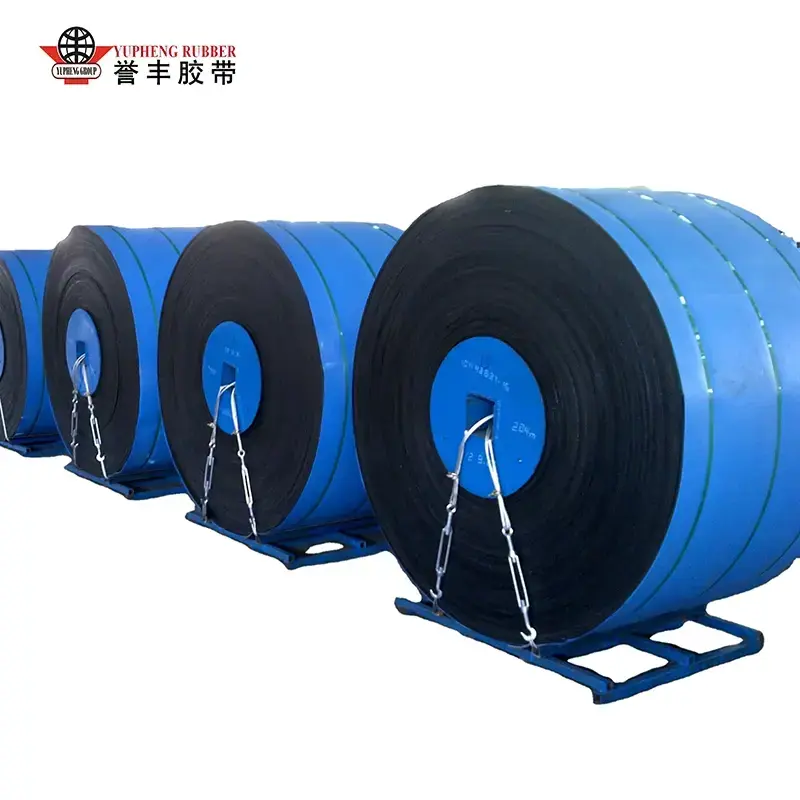
Our manufacturing facility has an annual production capacity of 30 million square meters of rubber conveyor belts. Established in Qingdao in 2010, we integrate independent R&D, large-scale manufacturing, and international sales to serve different industrial conveying requirements.
For conventional in-stock specifications, the production lead time is approximately 15–20 working days. Customized orders generally require 20–35 working days, depending on the specifications and production requirements.
8. Why Choose YUFENG for Steel Cord Conveyor Belts?
We understand that selecting a conveyor belt is not simply a matter of comparing tensile strength or unit price. The belt must match the conveyor structure, material characteristics, operating environment, and maintenance requirements.
At YUFENG, we manufacture a comprehensive range of rubber conveyor belts, including steel cord conveyor belts, fabric core conveyor belts, tubular conveyor belts, sidewall conveyor belts, heat-resistant belts, oil-resistant belts, and mining belts.
For customers evaluating a long-distance conveying project, we can support:
- Multiple tensile strength grades from ST630 to ST5000.
- Standard and customized belt widths.
- Specification recommendations based on actual working conditions.
- Factory inspection reports and customized inspection documents.
- Small samples for preliminary evaluation, with freight paid by the customer.
- On-site application pictures and project reference materials for evaluation.
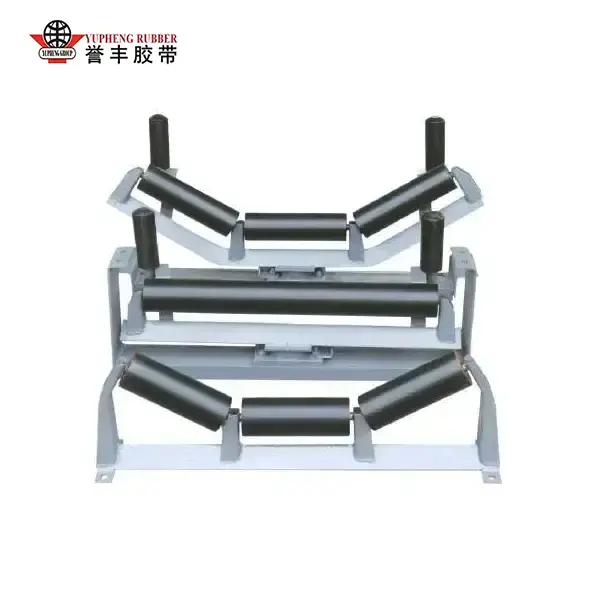
We also manufacture conveyor rollers, including trough rollers, buffer rollers, parallel rollers, and self-aligning rollers, providing additional conveying system components for industrial applications.
Our goal is to provide products that match actual operating requirements rather than simply recommending a higher specification than necessary.
9. Frequently Asked Questions
Q1: Why are steel cord conveyor belts better suited for long-distance conveying?
Steel cord conveyor belts use longitudinal high-strength steel cords as their tensile reinforcement. Compared with conventional multi-layer fabric belts, they offer higher tensile strength, lower elongation, and better structural stability. These properties make them suitable for long-distance and continuous heavy-duty transportation.
Q2: What is the maximum tensile strength grade available from YUFENG?
Our General Steel Cord Conveyor Belt range covers tensile strength grades from ST630 to ST5000. The appropriate grade depends on conveyor length, operating tension, material load, and system design.
Q3: What belt widths can be manufactured?
Our standard belt width range includes 500 mm, 650 mm, 800 mm, 1000 mm, 1200 mm, 1400 mm, 1600 mm, 1800 mm, and 2000 mm. Customized widths are also available according to project requirements.
Q4: Can steel cord conveyor belts handle heavy-impact materials such as iron ore?
Yes. Steel cord reinforcement provides longitudinal tensile strength, while the rubber cover protects the belt against abrasion and material impact. For iron ore and other heavy bulk materials, we recommend evaluating rubber cover thickness, loading-point design, and impact conditions together.
Q5: How can permanent elongation affect conveyor system maintenance?
Excessive elongation may require additional belt tension adjustments and affect tracking stability. Our General Steel Cord Conveyor Belt has a specified permanent elongation of ≤0.2% under rated load, helping maintain more stable belt dimensions during operation.
Q6: What is the expected service life of a steel cord conveyor belt?
Service life depends on material abrasiveness, loading impact, operating tension, installation quality, and maintenance. Our field application feedback indicates longer service cycles than traditional layered belts under comparable conditions. Regular inspections of rubber wear, steel cord exposure, bonding, and conveyor rollers remain important.
Q7: How long does YUFENG need to manufacture a steel cord conveyor belt?
Conventional in-stock specifications generally require 15–20 working days. Customized orders usually require 20–35 working days, depending on belt dimensions, tensile strength grade, and production arrangements.
Conclusion
Steel cord conveyor belts are a practical choice for long-distance conveying because their high-strength reinforcement, low elongation, and integrated rubber structure help maintain stable operation under continuous heavy loads.
However, the right belt still depends on the complete conveyor system. Tensile strength, belt width, rubber cover thickness, material characteristics, and operating conditions should all be evaluated before production.
With experience in rubber conveyor belt manufacturing since 2010 and an annual production capacity of 30 million square meters, YUFENG provides General Steel Cord Conveyor Belt solutions for mining, ports, cement plants, and other heavy industrial applications.
If you are planning a new long-distance conveyor line or replacing an existing belt, contact our team with your conveyor length, material type, required belt width, and operating conditions. We can help evaluate suitable specifications for your project.
Related News
- What Makes a Special Performance Conveyor Belt Essential for Demanding Industrial Applications?
- How Does a Heat Resistant Steel Cord Conveyor Belt Improve Performance in High-Temperature Industries?
- Core Construction Determines Reliability of General Steel Cord Conveyor Belts for Heavy-Duty Bulk Handling
- What Makes a General Steel Cord Conveyor Belt Reliable for Heavy-Duty Operations?
- What are the application scenarios for steel cord conveyor belts?
- Advantages of Steel Cord Conveyor Belts
Leave me a message
News Recommendations